Enjoy Pancakes Recipe in 11 Steps
Published: 16 Mar 2026
Here is a short video explaining the process, scroll down for detailed ingredients and step by step recipe method. Thanks for coming and do not forget to follow Food Paradise on Pinterest.
Table of Contents
Read carefully about these ingredients, written with the exact amount needed to get started.
Ingredients for Pancakes
Before you begin, take a moment to measure everything carefully. Good pancakes start with the right amounts. Accurate measuring helps the batter stay balanced and gives you pancakes that rise well and cook evenly.
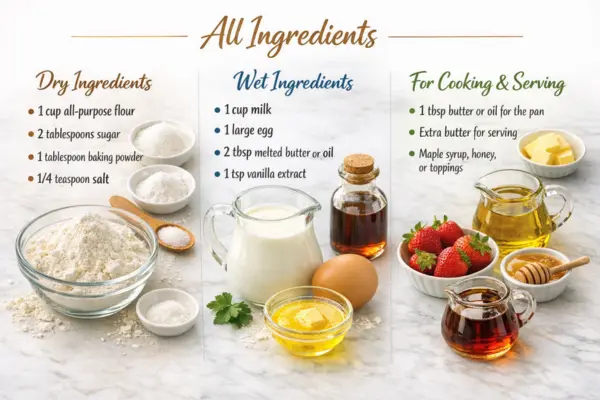
Dry Ingredients
- 1 cup all-purpose flour
- 2 tablespoons sugar
- 1 tablespoon baking powder
- 1/4 teaspoon salt
Wet Ingredients
- 1 cup milk
- 1 large egg
- 2 tablespoons melted butter or neutral oil
- 1 teaspoon vanilla extract
For Cooking and Serving
- 1 tablespoon butter or oil for greasing the pan
- Extra butter for serving, if desired
- Maple syrup, honey, or your favorite topping
Ingredient Notes for the Best Results
The ingredients in this recipe are simple, but each one plays an important part. The flour gives the pancakes structure. The sugar adds a light touch of sweetness and also helps with color. The baking powder helps the batter rise, which is what gives pancakes their soft and fluffy texture. Salt may seem small, but it lifts the flavor and keeps the pancakes from tasting flat.
The milk adds moisture and helps create a smooth batter. The egg brings the mixture together and supports the texture. Melted butter adds flavor and tenderness, while vanilla gives a warm and pleasant aroma. These small touches make the pancakes taste homemade in the best way.
If your baking powder has been sitting in the cupboard for a long time, it is worth checking that it is still fresh. Old baking powder often leads to flat pancakes.
Kitchen Tools You Will Need
Making pancakes does not require special equipment, but using the right basic tools makes the process easier and smoother. A few simple items will help you mix the batter well and cook each pancake evenly.
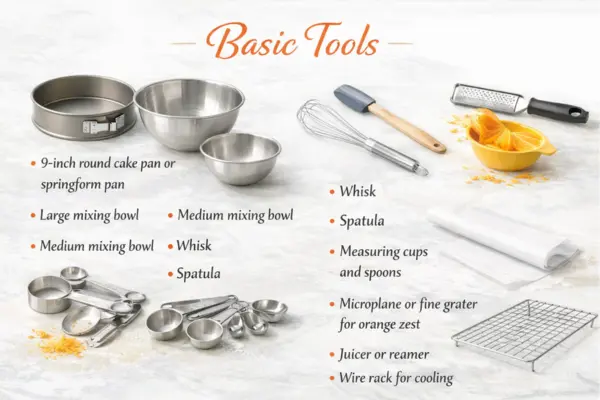
Useful Tools
- 1 large mixing bowl
- 1 medium mixing bowl
- 1 whisk
- 1 measuring cup set
- 1 measuring spoon set
- 1 non-stick skillet, frying pan, or griddle
- 1 spatula
- 1 ladle or 1/4 cup measure for pouring batter
Step by Step Recipe Method
This is the most important part of the recipe. Follow these steps carefully, and you will get soft, fluffy, golden pancakes that taste wonderful. Read through the full method once before you start so you know what to expect.
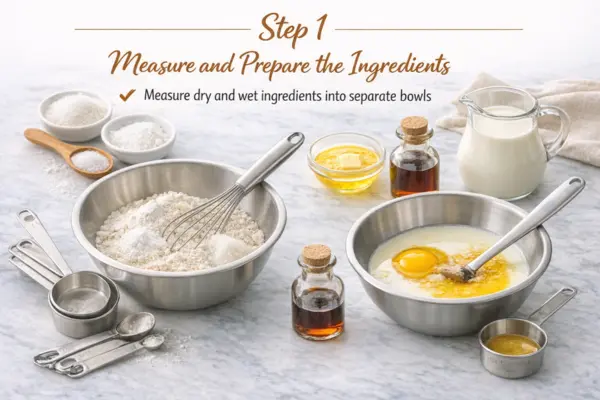
Step 1: Measure and Prepare the Ingredients
Start by gathering all your ingredients on the counter. Measure the flour, sugar, baking powder, and salt into one bowl. In another bowl, measure the milk, crack in the egg, add the melted butter, and pour in the vanilla extract.
This small bit of preparation makes the cooking process easier. It also helps you avoid mistakes, especially once the pan is hot and you are ready to cook. If your melted butter is very hot, let it cool for a minute before mixing it with the egg so it does not begin to cook the egg.
Step 2: Mix the Dry Ingredients
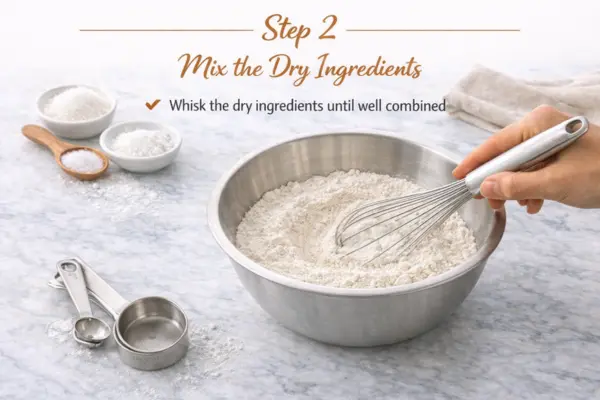
Take the bowl with the flour, sugar, baking powder, and salt, and whisk them together well. This step matters more than many people think. When the dry ingredients are mixed properly, the baking powder and salt spread evenly through the flour, which helps the pancakes rise and cook with a consistent texture.
Whisking also breaks up small lumps in the flour and gives you a smoother batter later. You do not need to spend a long time on this step. About 20 to 30 seconds of whisking is enough.
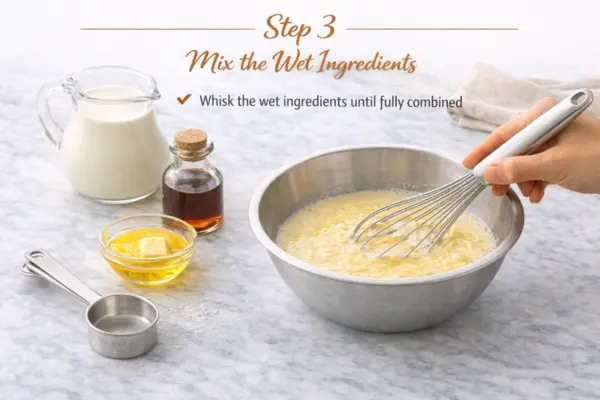
Step 3: Mix the Wet Ingredients
In the second bowl, whisk together the milk, egg, melted butter, and vanilla extract until the mixture looks smooth and fully combined. The egg should be broken up completely, and the butter should blend well into the liquid.
This mixture should look light and even, without streaks of egg yolk floating in it. A good wet mixture makes it easier to combine everything without overworking the batter in the next step.
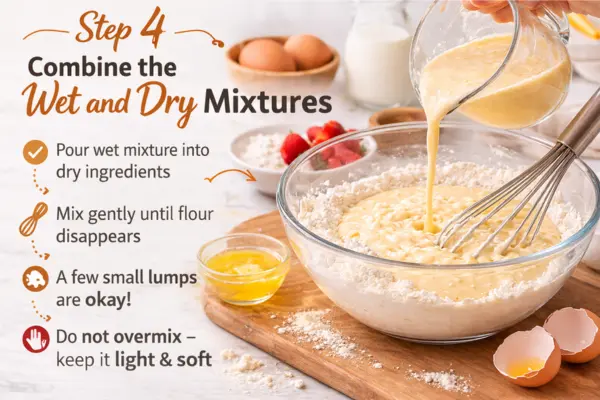
Step 4: Combine the Wet and Dry Mixtures
Now pour the wet mixture into the bowl of dry ingredients. Use a whisk or spoon to mix gently until the flour disappears. Do not beat the batter hard, and do not keep mixing until it looks perfectly smooth. A few small lumps are completely fine.
This is one of the most important pancake tips. Overmixing is a common reason pancakes turn out heavy and dense. Gentle mixing keeps the batter lighter and helps the pancakes stay soft after cooking. Stop mixing as soon as you no longer see dry flour.
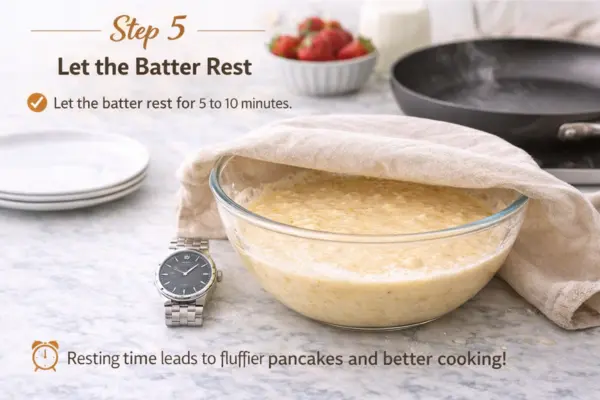
Step 5: Let the Batter Rest
Set the batter aside for about 5 to 10 minutes. This short rest gives the flour time to absorb the liquid and allows the baking powder to begin doing its work. The batter may look slightly thicker after resting, and that is a good sign.
Do not skip this step if you want the best texture. Resting the batter often leads to fluffier pancakes and a more even surface while cooking. During this time, you can heat your pan and prepare your serving plate.
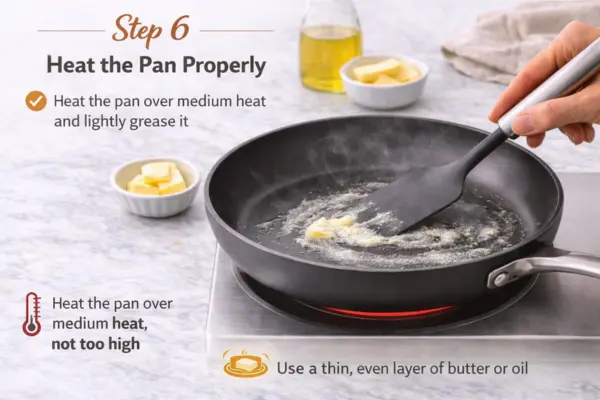
Step 6: Heat the Pan Properly
Place a non-stick skillet or griddle over medium heat. Do not rush this part by turning the heat too high. A pan that is too hot can burn the outside of the pancakes before the inside cooks through. A pan that is too cool can make the pancakes pale and dry.
Once the pan is warm, lightly grease it with a small amount of butter or oil. Spread it evenly across the surface. You only need a thin layer. Too much fat in the pan can make the pancakes fry unevenly and develop a patchy surface instead of a smooth golden color.
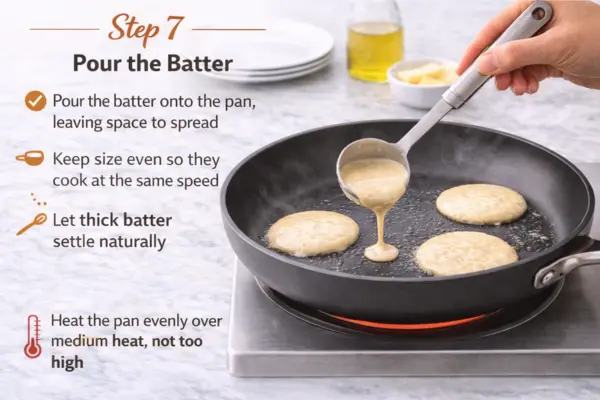
Step 7: Pour the Batter
Use a ladle or a 1/4 cup measure to pour the batter onto the hot pan. Leave space between each pancake so they have room to spread and so you can flip them easily.
Try to keep the size even. Pancakes that are close in size usually cook at the same speed, which makes the process much easier. If your batter is very thick, do not force it flat with the spoon. Let it settle naturally on the pan.
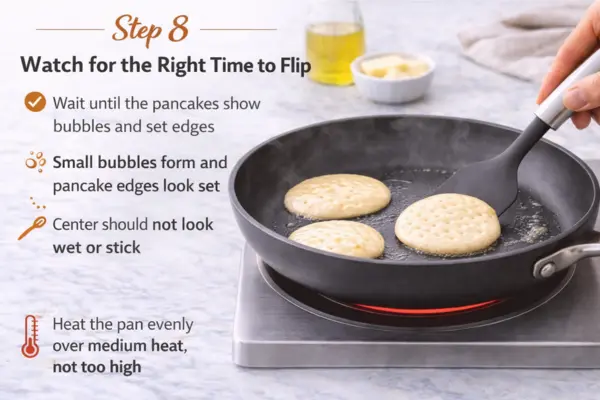
Step 8: Watch for the Right Time to Flip
Let the pancakes cook on the first side until small bubbles start to appear on the surface and the edges begin to look set. This usually takes about 2 to 3 minutes, depending on your pan and the heat level.
Do not flip too early. If the center still looks wet and the bubbles have not formed, wait a little longer. The pancake should lift from the pan easily when it is ready. Slide the spatula gently underneath and flip it in one smooth motion.
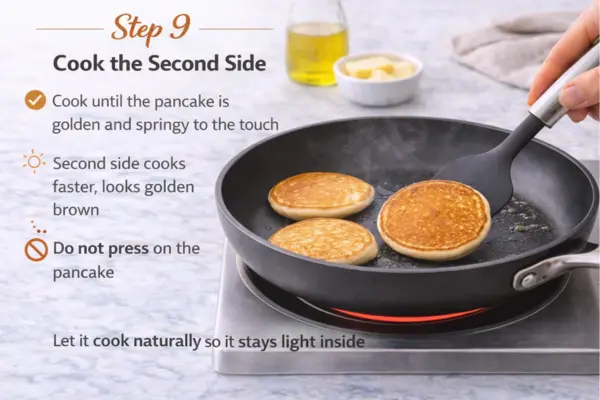
Step 9: Cook the Second Side
After flipping, cook the pancake for another 1 to 2 minutes on the other side. The second side usually cooks faster than the first. The pancake should look golden brown and feel springy when lightly touched.
Avoid pressing down on the pancake with the spatula. This pushes out the air and can make the pancake less fluffy. Let it cook naturally so it stays light inside.
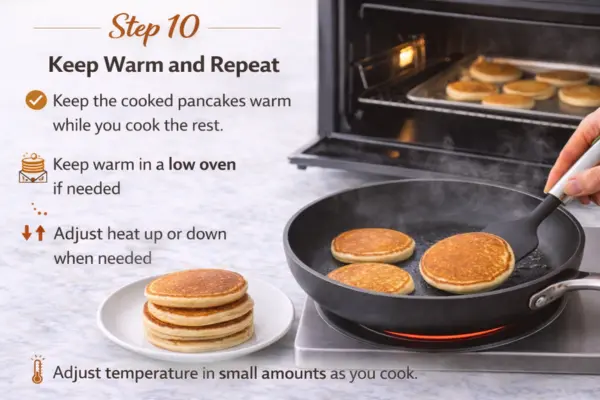
Step 10: Keep Warm and Repeat
Transfer the cooked pancakes to a plate. If you are making a full batch, you can keep them warm in a low oven while you cook the rest. Repeat the process with the remaining batter, adding a little more butter or oil to the pan only if needed.
If you notice the pancakes are browning too quickly, lower the heat slightly. If they are taking too long and staying pale, raise the heat just a little. Small adjustments make a big difference when cooking pancakes.
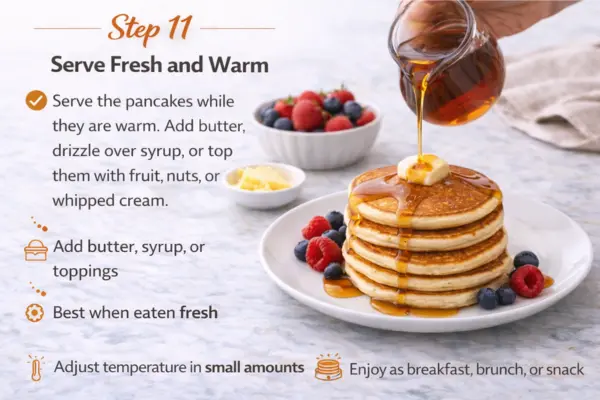
Step 11: Serve Fresh and Warm
Serve the pancakes while they are warm. Add butter, drizzle over syrup, or top them with fruit, nuts, or whipped cream. Freshly cooked pancakes have the best texture and flavor, so bring them to the table as soon as possible.
A stack of these pancakes is wonderful for breakfast, brunch, or even a sweet snack. The flavor is gentle and comforting, which makes them perfect for many kinds of toppings.
Serving Ideas for Pancakes
Once your pancakes are ready, the fun really begins. Toppings can keep the recipe simple or turn it into something extra special. A classic topping works beautifully, but a few fresh ingredients can make the plate feel even more inviting.
Classic Serving Ideas
- Butter and maple syrup
- Honey and a light dusting of powdered sugar
- Butter with a spoon of fruit jam
Fresh Fruit Ideas
- Sliced bananas
- Strawberries
- Blueberries
- Raspberries
- Warm cooked apples with cinnamon
Rich and Sweet Ideas
- Chocolate chips
- Nut spread
- Whipped cream
- Crushed nuts
- Caramel sauce
For a balanced breakfast, serve pancakes with fresh fruit and a warm drink. If you are making breakfast for family or guests, a topping board with different choices makes the meal feel special and welcoming.
Variations in the Recipe
One of the best things about pancakes is how easy they are to adjust. Once you know the basic recipe, you can create different flavors without making the method complicated. These simple variations work well at home and keep the recipe exciting.
Blueberry Pancakes
Blueberries add a fresh, sweet burst in every bite. You can use fresh or frozen blueberries. After pouring the batter onto the pan, scatter a few blueberries over each pancake before flipping. This helps keep the berries spread nicely through the pancake.
Chocolate Chip Pancakes
For a sweeter version, sprinkle a small handful of chocolate chips over the batter once it is in the pan. This method helps stop the chips from sinking too much in the bowl. These pancakes are especially popular with children and make a lovely weekend treat.
Banana Pancakes
Mash 1 ripe banana and stir it gently into the wet mixture before combining it with the dry ingredients. Banana adds natural sweetness and gives the pancakes a soft texture. A little cinnamon also works well with this version.
Cinnamon Pancakes
Add 1/2 teaspoon ground cinnamon to the dry ingredients. This gives the pancakes a warm, cozy flavor that pairs beautifully with apples, honey, or a small piece of butter on top.
Whole Wheat Pancakes
Replace half of the all-purpose flour with whole wheat flour. This makes the pancakes slightly heartier while still keeping them tender. If the batter feels too thick, add 1 to 2 extra tablespoons of milk.
Buttermilk Pancakes
Replace the milk with buttermilk for a deeper flavor and a very tender texture. Buttermilk adds a pleasant tang and often gives pancakes a softer crumb.
Mistakes to Avoid
Pancakes are easy to make, but a few common mistakes can affect the final result. Knowing what to avoid helps you make better pancakes every time.
Overmixing the Batter
This is one of the biggest pancake mistakes. When the batter is mixed too much, the pancakes often turn dense and chewy instead of light and fluffy. Mix gently and stop when the flour is just combined.
Using High Heat
A very hot pan may look like a good way to cook faster, but it usually causes the outside to brown too quickly while the center stays undercooked. Medium heat gives better control and more even cooking.
Flipping Too Soon
If you flip the pancake before the surface shows bubbles and the edges begin to set, the batter may spread or break. Give the pancake enough time on the first side so it holds its shape when turned.
Using Too Much Butter or Oil in the Pan
A heavily greased pan can make pancakes cook unevenly and leave dark patches. Use only a light coating. Wipe away extra fat if needed.
Not Measuring Properly
Too much flour can make the batter thick and heavy, while too much liquid can make it thin and weak. Careful measuring gives a better texture and more reliable results.
Skipping the Batter Rest
Letting the batter rest for a few minutes improves the texture. Skipping this step may still give you pancakes, but they may not be as fluffy or even.
Helpful Tips for Perfect Pancakes Every Time
A few small habits can take your pancakes from good to excellent. These practical tips come from real kitchen experience and make the whole process easier.
Keep the Heat Steady
The first pancake often tells you how your pan is behaving. If it browns too fast, lower the heat slightly. If it stays pale, raise the heat a little. Once you find the right setting, keep it there as much as possible.
Use Fresh Baking Powder
Baking powder helps the pancakes rise. If it is old, the pancakes may come out flat and heavy. Fresh ingredients make a real difference in simple recipes like this one.
Do Not Press the Pancakes
After flipping, let the pancake cook on its own. Pressing it down with a spatula pushes out the air and reduces the soft texture you want.
Cook a Test Pancake First
If you are unsure about the batter thickness or pan temperature, cook one pancake first. This gives you a chance to adjust the heat before making the full batch.
Serve Soon After Cooking
Pancakes taste best when fresh and warm. If you need to hold them for a short time, place them in a warm oven on a tray without stacking them too tightly.
How to Store and Reheat Pancakes
If you have leftovers, do not worry. Pancakes store well and can be enjoyed later. This makes them useful for busy mornings when you want something homemade without starting from scratch.
How to Store Pancakes
Let the pancakes cool fully before storing them. Place them in an airtight container and keep them in the refrigerator for up to 3 days. You can place a small sheet of baking paper between them if you want to prevent sticking.
How to Freeze Pancakes
Arrange the cooled pancakes in a single layer first so they do not stick together. Once they are firm, transfer them to a freezer-safe bag or container. They can be frozen for up to 2 months.
How to Reheat Pancakes
You can reheat pancakes in several easy ways. Warm them in a toaster for a lightly crisp edge, heat them in the microwave for a softer texture, or place them in a skillet over low heat until warmed through. If reheating a larger batch, the oven works well too.
FAQs About Pancakes
Many home cooks have the same questions when making pancakes for the first time. These clear answers will help you feel more confident and avoid common problems.
Why are my pancakes not fluffy?
Flat pancakes usually happen because the baking powder is old, the batter was mixed too much, or the pan heat was not right. Fresh baking powder, gentle mixing, and steady medium heat all help create fluffier pancakes.
Can I make pancake batter ahead of time?
Fresh batter gives the best texture, but you can keep it in the refrigerator for a short time if needed. Try to use it within 24 hours. Stir it very gently before cooking, but do not overmix it.
Can I make pancakes without vanilla?
Yes, you can. Vanilla adds a gentle extra flavor, but the pancakes will still turn out well without it. If you do not have vanilla, simply leave it out.
What should pancake batter look like?
Pancake batter should be thick enough to pour but not so thick that it sits like dough. It should flow from the spoon or ladle, and a few small lumps are perfectly fine.
Can I use water instead of milk?
You can, but milk gives better flavor and a softer texture. Water will work in an emergency, though the pancakes may taste less rich.
Why is the first pancake often different?
The first pancake usually cooks while the pan is still settling into the right heat. It is very common for the first one to look a little different. Think of it as your test pancake.
Can I double this recipe?
Yes, this recipe doubles very well. Just measure everything carefully and keep mixing gentle so the batter stays light.
Conclusion
A good pancake recipe should feel simple, dependable, and worth making again. These homemade pancakes are soft, fluffy, full of comforting flavor, and easy to prepare with everyday ingredients. When you follow the steps carefully, especially with gentle mixing and proper pan heat, the results are truly satisfying.
This recipe is perfect for relaxed weekend breakfasts, family brunches, or those mornings when you want something warm and homemade without too much work. Once you try the basic version, you can enjoy changing it with fruit, chocolate chips, banana, or your favorite toppings.
If you enjoyed this recipe, be sure to check the homepage for more tasty food recipes, kitchen tips, and easy ideas to make at home.




- Be Respectful
- Stay Relevant
- Stay Positive
- True Feedback
- Encourage Discussion
- Avoid Spamming
- No Fake News
- Don't Copy-Paste
- No Personal Attacks
- Be Respectful
- Stay Relevant
- Stay Positive
- True Feedback
- Encourage Discussion
- Avoid Spamming
- No Fake News
- Don't Copy-Paste
- No Personal Attacks
