Vanilla Crème Brûlée (Classic, Creamy, and Crackly on Top)
Published: 27 Feb 2026
Complete recipe in 10 steps with a dedicated picture and detailed text. Enjoy the recipe, and don’t forget to follow Food Peradise on Pinterest.
Table of Contents
Ingredients with exact amount
This recipe makes 6 servings in 6-ounce (180 ml) ramekins. It uses a classic ratio that gives a rich, creamy texture.
Ingredients for the custard
- 2 cups (480 ml) heavy cream
- 5 large egg yolks
- 1/2 cup (100 g) granulated sugar
- 1 vanilla bean, split and scraped, or 1 teaspoon pure vanilla extract
- Pinch of salt
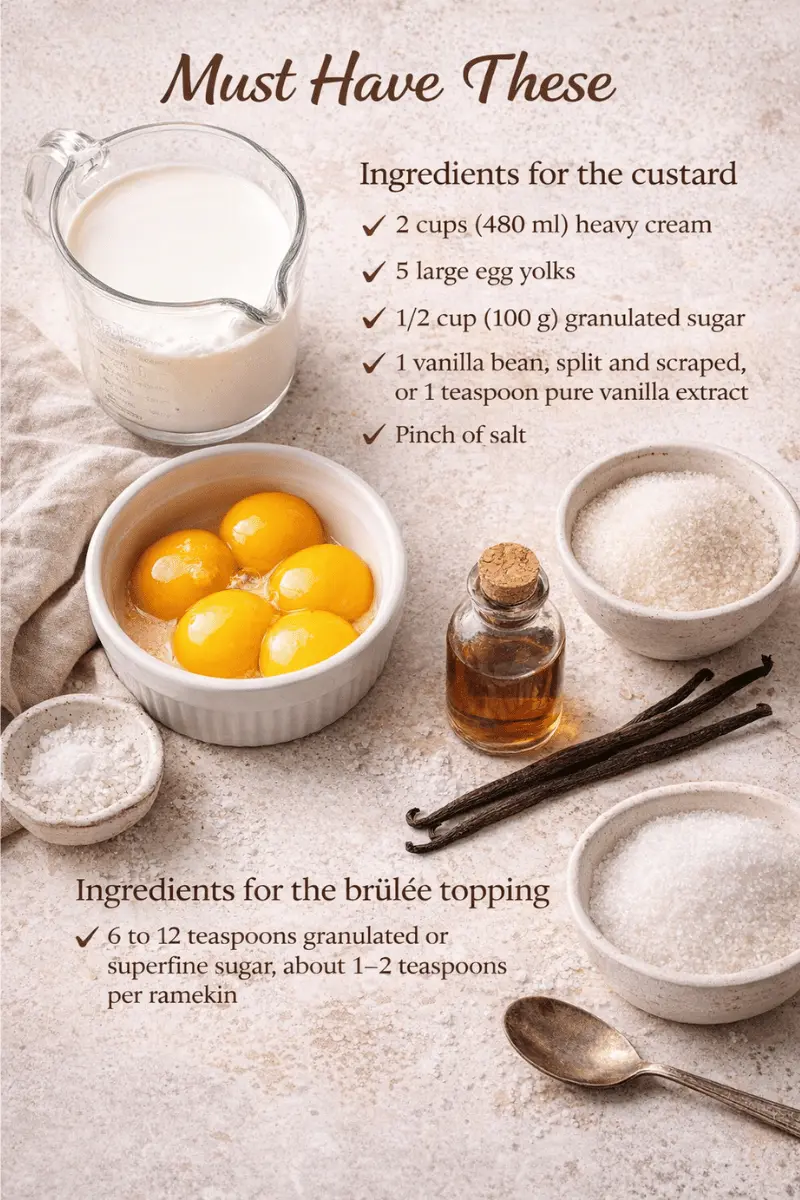
Ingredients for the brûlée topping
- 6 to 12 teaspoons granulated or superfine sugar, about 1–2 teaspoons per ramekin
Step by Step Recipe Method
Crème brûlée is all about gentle heat and patience. You are not rushing the custard. You are guiding it into a soft set, then chilling it until it turns perfectly creamy. The sugar top comes last, right before serving.
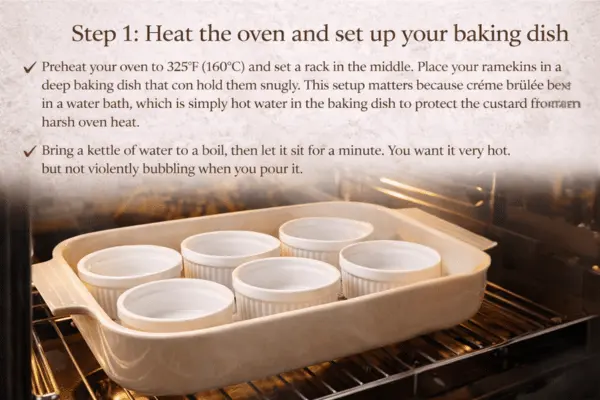
Step 1: Heat the oven and set up your baking dish
Preheat your oven to 325°F (160°C) and set a rack in the middle. Place your ramekins in a deep baking dish that can hold them snugly. This setup matters because crème brûlée bakes best in a water bath, which is simply hot water in the baking dish to protect the custard from harsh oven heat.
Bring a kettle of water to a boil, then let it sit for a minute. You want it very hot, but not violently bubbling when you pour it.
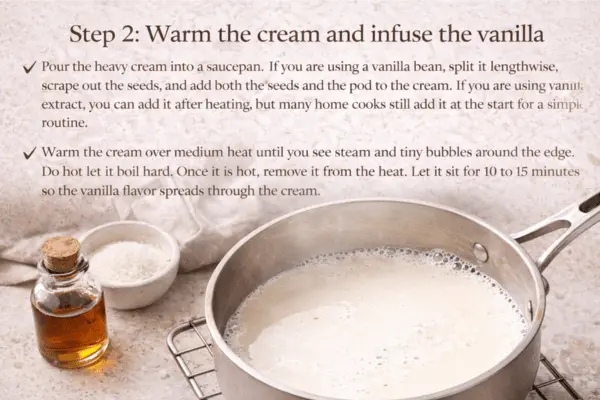
Step 2: Warm the cream and infuse the vanilla
Pour the heavy cream into a saucepan. If you are using a vanilla bean, split it lengthwise, scrape out the seeds, and add both the seeds and the pod to the cream. If you are using vanilla extract, you can add it after heating, but many home cooks still add it at the start for a simple routine.
Warm the cream over medium heat until you see steam and tiny bubbles around the edge. Do not let it boil hard. Once it is hot, remove it from the heat. Let it sit for 10 to 15 minutes so the vanilla flavor spreads through the cream.
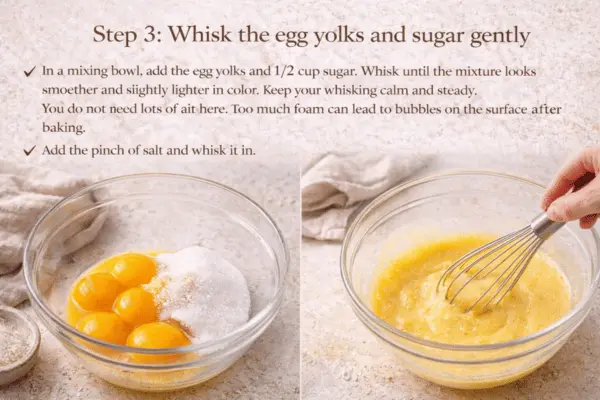
Step 3: Whisk the egg yolks and sugar gently
In a mixing bowl, add the egg yolks and 1/2 cup sugar. Whisk until the mixture looks smoother and slightly lighter in color. Keep your whisking calm and steady. You do not need lots of air here. Too much foam can lead to bubbles on the surface after baking.
Add the pinch of salt and whisk it in.
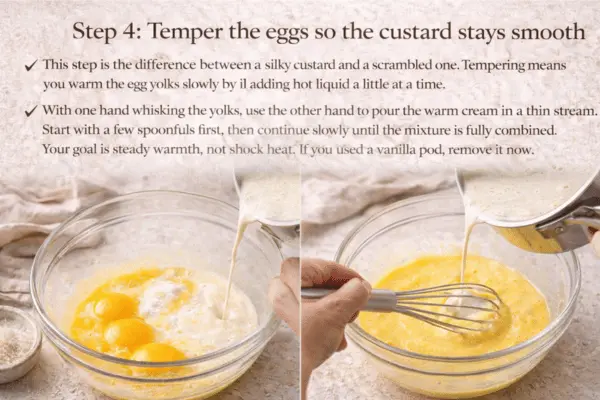
Step 4: Temper the eggs so the custard stays smooth
This step is the difference between a silky custard and a scrambled one. Tempering means you warm the egg yolks slowly by adding hot liquid a little at a time.
With one hand whisking the yolks, use the other hand to pour the warm cream in a thin stream. Start with a few spoonfuls first, then continue slowly until the mixture is fully combined. Your goal is steady warmth, not shock heat. If you used a vanilla pod, remove it now.
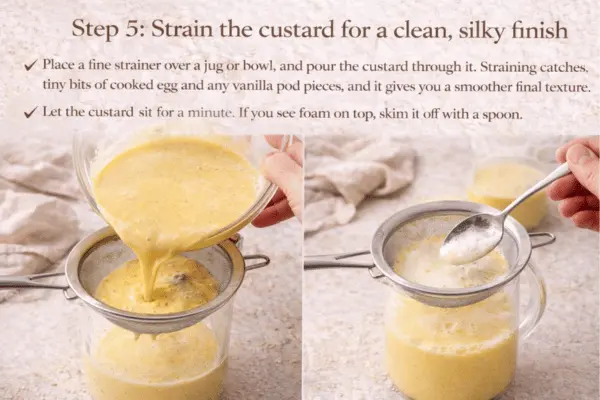
Step 5: Strain the custard for a clean, silky finish
Place a fine strainer over a jug or bowl, and pour the custard through it. Straining catches tiny bits of cooked egg and any vanilla pod pieces, and it gives you a smoother final texture.
Let the custard sit for a minute. If you see foam on top, skim it off with a spoon.
Step 6: Fill the ramekins evenly
Pour the custard into the ramekins, filling each one about 2/3 to 3/4 full. This gives enough depth for a creamy bite while keeping bake time consistent.
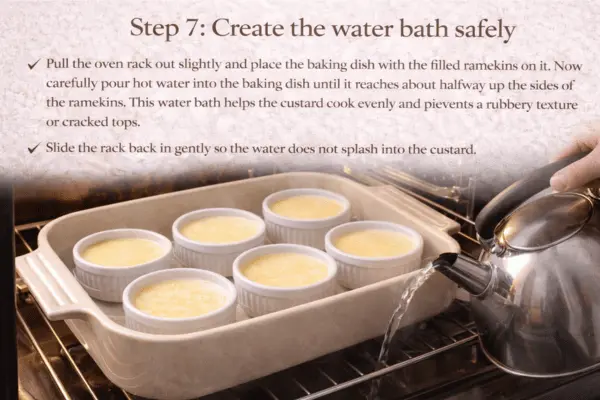
Step 7: Create the water bath safely
Pull the oven rack out slightly and place the baking dish with the filled ramekins on it. Now carefully pour hot water into the baking dish until it reaches about halfway up the sides of the ramekins. This water bath helps the custard cook evenly and prevents a rubbery texture or cracked tops.
Slide the rack back in gently so the water does not splash into the custard.
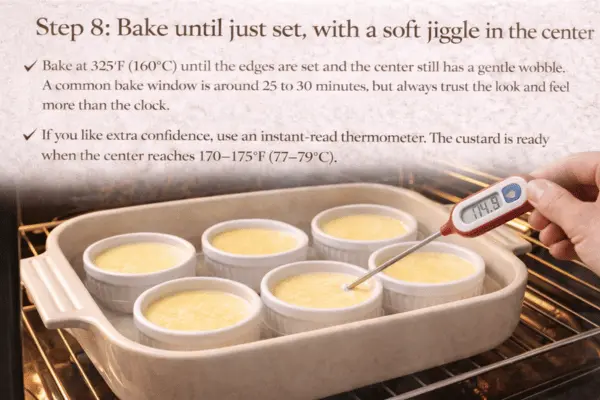
Step 8: Bake until just set, with a soft jiggle in the center
Bake at 325°F (160°C) until the edges are set and the center still has a gentle wobble. A common bake window is around 25 to 30 minutes, but always trust the look and feel more than the clock.
If you like extra confidence, use an instant-read thermometer. The custard is ready when the center reaches 170–175°F (77–79°C).
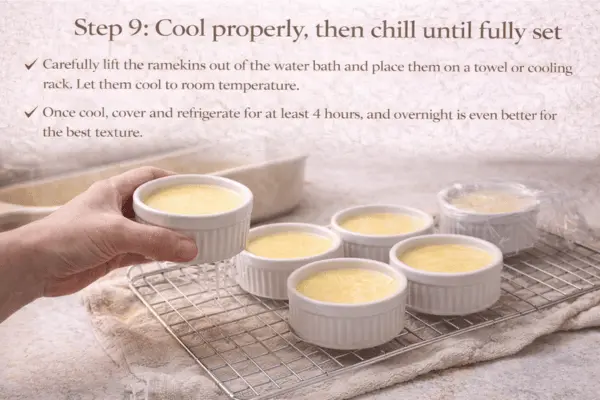
Step 9: Cool properly, then chill until fully set
Carefully lift the ramekins out of the water bath and place them on a towel or cooling rack. Let them cool to room temperature. Once cool, cover and refrigerate for at least 4 hours, and overnight is even better for the best texture.
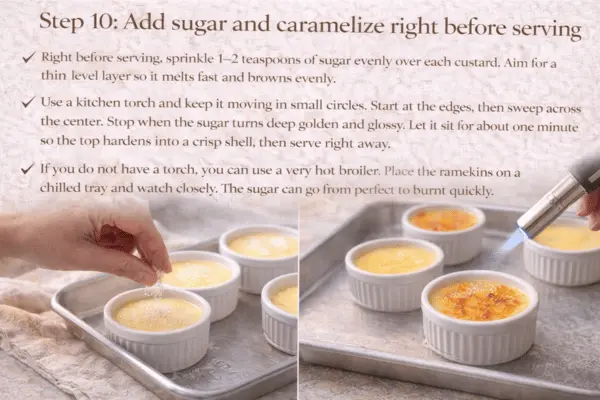
Step 10: Add sugar and caramelize right before serving
Right before serving, sprinkle 1–2 teaspoons of sugar evenly over each custard. Aim for a thin, level layer so it melts fast and browns evenly.
Use a kitchen torch and keep it moving in small circles. Start at the edges, then sweep across the center. Stop when the sugar turns deep golden and glossy. Let it sit for about one minute so the top hardens into a crisp shell, then serve right away.
If you do not have a torch, you can use a very hot broiler. Place the ramekins on a chilled tray and watch closely. The sugar can go from perfect to burnt quickly, so stay right there.
Variations in the Recipe
Vanilla crème brûlée is a classic for a reason, but small changes can make it feel new while keeping the method the same.

Vanilla choices that change the flavor
- Vanilla bean gives the strongest aroma and those beautiful specks.
- Pure vanilla extract keeps things simple and still tastes wonderful.
Simple flavor twists that still feel elegant
- Add orange zest to the cream while it warms, then strain it out for a fresh finish.
- Add espresso powder for a gentle coffee note.
- Steep a cinnamon stick in the warm cream, then remove it before tempering.
Serving ideas that balance the richness
Serve with fresh berries or lightly poached fruit for a bright contrast. Some chefs love that fruit acidity next to the rich custard.
Mistakes to Avoid
These are the common problems that trip people up, and how to prevent them in a calm, practical way.
Boiling the cream hard
A hard boil can push the custard toward a grainy texture. Heat until steaming with tiny bubbles at the edge, then stop.
Whisking too aggressively
You want a smooth custard, not a foamy one. Whisk gently so you do not trap extra air.
Pouring the hot cream too fast
If you rush tempering, the yolks can curdle. Pour slowly while whisking the whole time.
Skipping the water bath
The water bath is not a fancy extra. It protects your custard from direct oven heat and helps it bake evenly.
Overbaking “just to be safe”
Crème brûlée sets as it cools. Pull it when the center still jiggles a little, or confirm with 170–175°F (77–79°C) at the center.
Burning the sugar topping
Keep your torch moving and use a thin sugar layer. Superfine sugar can melt faster and brown more evenly, which helps when you want a quick crust.
Conclusion
Vanilla crème brûlée is a simple dessert made special by good habits. Use gentle heat, bake in a water bath, chill until fully set, and caramelize the sugar right before serving. When you get that clean crack on top and the spoon slides into the custard, it feels like a win every time.
If you enjoyed this recipe, check the homepage for more food recipes and fresh ideas you can make at home.
FAQs Section
Here are clear answers to the most common questions people ask while making vanilla crème brûlée at home.
Can I make vanilla crème brûlée ahead of time?
Yes, and it often turns out better that way. Bake and chill the custards ahead, then caramelize the sugar topping right before serving so the top stays crisp.
How do I know the custard is done baking?
The edges should look set, and the center should wobble gently when you move the ramekin. If you use a thermometer, aim for 170–175°F (77–79°C) in the center.
What sugar is best for the brûlée topping?
Granulated sugar works well and caramelizes cleanly. Superfine sugar can melt faster and help you get a smooth, even crust with less heat time.
How much sugar should I put on top?
Use about 1–2 teaspoons per ramekin. Spread it evenly so it melts into a thin sheet instead of a thick layer that burns on the surface.
Can I use the broiler instead of a torch?
Yes, but you must watch closely. A broiler can brown sugar quickly, and it can also warm the custard if you leave it too long. Use a hot broiler, keep the ramekins close to the heat, and remove them the moment the sugar turns golden.






- Be Respectful
- Stay Relevant
- Stay Positive
- True Feedback
- Encourage Discussion
- Avoid Spamming
- No Fake News
- Don't Copy-Paste
- No Personal Attacks
- Be Respectful
- Stay Relevant
- Stay Positive
- True Feedback
- Encourage Discussion
- Avoid Spamming
- No Fake News
- Don't Copy-Paste
- No Personal Attacks
