Shahi Tukray — The Royal Indian-Pakistani Dessert You Must Try
Published: 31 Jan 2026
Complete recipe in 4 steps with a dedicated picture and detailed text. Enjoy the recipe, and don’t forget to follow Food Peradise on Pinterest.
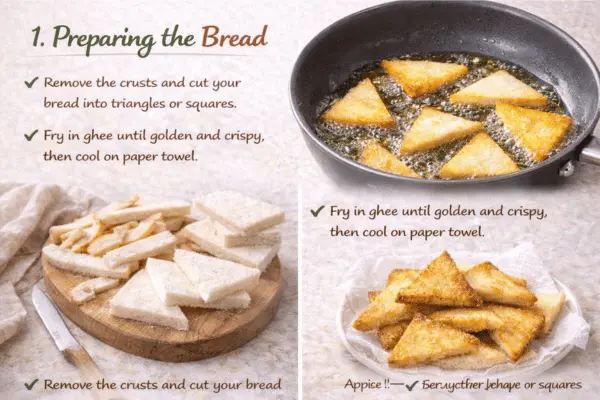
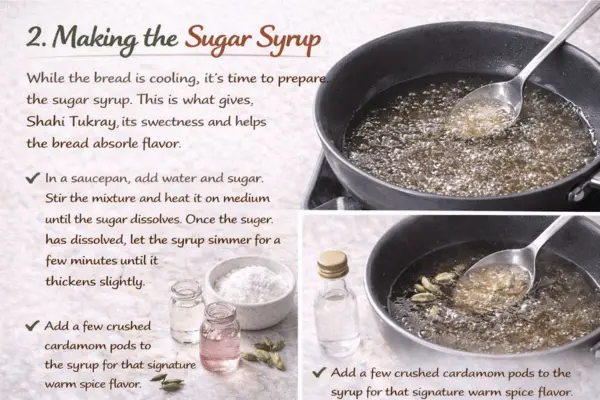
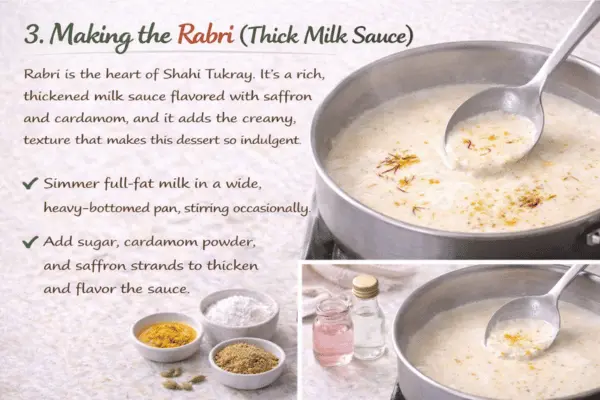
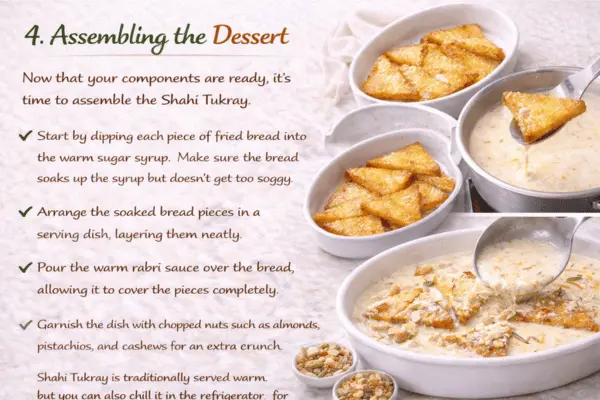
Table of Contents
Ingredients You’ll Need
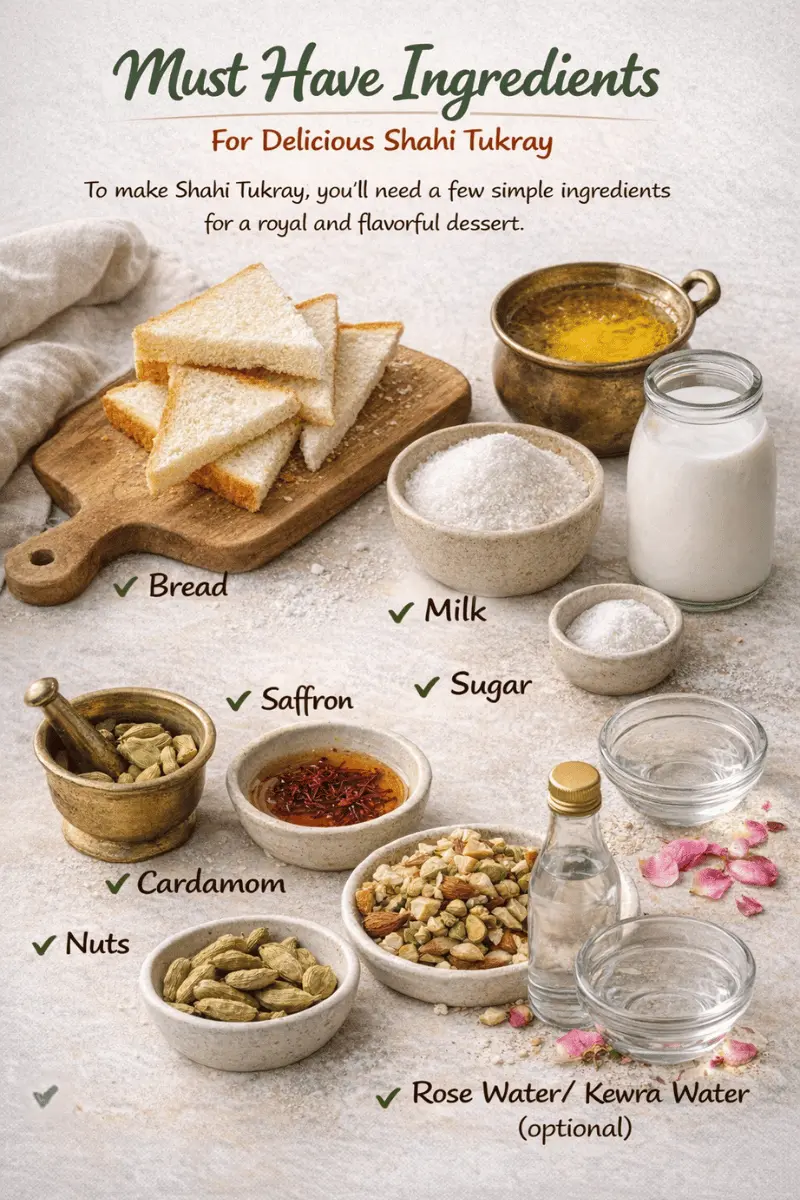
To make Shahi Tukray, you’ll need a few simple ingredients that you likely already have in your kitchen, along with a couple of special ones that give the dish its distinctive royal flavor.
Main Ingredients:
- Bread slices — Use white bread for a traditional touch. You can cut them into triangles or squares.
- Ghee (clarified butter) — For frying the bread to a crispy, golden texture.
- Milk — Full-fat milk is ideal to make the rabri thick and creamy.
- Sugar — For the sugar syrup that coats the bread.
- Saffron — This gives the dessert its rich color and fragrant aroma.
- Cardamom — This spice adds a delightful warmth to the flavor.
- Nuts (almonds, pistachios) — Chopped, to garnish and add crunch.
- Rose water or kewra water (optional) — A few drops can enhance the fragrance and give it a unique flavor.
You can also make substitutions for a lighter version, such as using milk instead of full-fat cream or shallow frying instead of deep frying.
Step-by-Step Method to Make Perfect Shahi Tukray
Making Shahi Tukray involves a few key steps that come together to create this decadent dessert. Don’t worry if you’ve never made it before; the process is simple once you know what to do.
1. Preparing the Bread
The first step to making Shahi Tukray is preparing the bread. You’ll want to start by removing the crusts from your bread slices, as this will help them soak up the syrup and rabri better. Then, cut the bread into triangles or squares — whichever shape you prefer.
Next, heat some ghee (clarified butter) in a pan on medium heat. Fry the bread pieces until they are golden and crispy. You can either deep fry or shallow fry them based on your preference. Once fried, remove the bread pieces and let them cool on a paper towel to absorb any excess ghee.
2. Making the Sugar Syrup
While the bread is cooling, it’s time to prepare the sugar syrup. This is what gives Shahi Tukray its sweetness and helps the bread absorb flavor.
In a saucepan, add water and sugar. Stir the mixture and heat it on medium until the sugar dissolves. Once the sugar has dissolved, let the syrup simmer for a few minutes until it thickens slightly.
Add a few crushed cardamom pods to the syrup for that signature warm spice flavor. For an extra touch of aroma, you can add a few drops of rose water or kewra water at this stage. Keep the syrup warm for soaking the fried bread.
3. Making the Rabri (Thick Milk Sauce)
Rabri is the heart of Shahi Tukray. It’s a rich, thickened milk sauce flavored with saffron and cardamom, and it adds the creamy texture that makes this dessert so indulgent.
Start by heating full-fat milk in a wide, heavy-bottomed pan. Once the milk comes to a boil, lower the heat and let it simmer, stirring occasionally. As the milk reduces, it will thicken into a creamy consistency.
Add sugar to the milk and stir it until dissolved. Then, add cardamom powder and saffron strands to give it a rich flavor and color. Keep simmering until the milk reduces to about half its original volume. This will result in a thick, creamy rabri sauce.
4. Assembling the Dessert
Now that your components are ready, it’s time to assemble the Shahi Tukray.
- Start by dipping each piece of fried bread into the warm sugar syrup. Make sure the bread soaks up the syrup but doesn’t get too soggy.
- Arrange the soaked bread pieces in a serving dish, layering them neatly.
- Pour the warm rabri sauce over the bread, allowing it to cover the pieces completely.
- Garnish the dish with chopped nuts such as almonds, pistachios, and cashews for an extra crunch.
Shahi Tukray is traditionally served warm, but you can also chill it in the refrigerator for a couple of hours if you prefer a cold dessert.
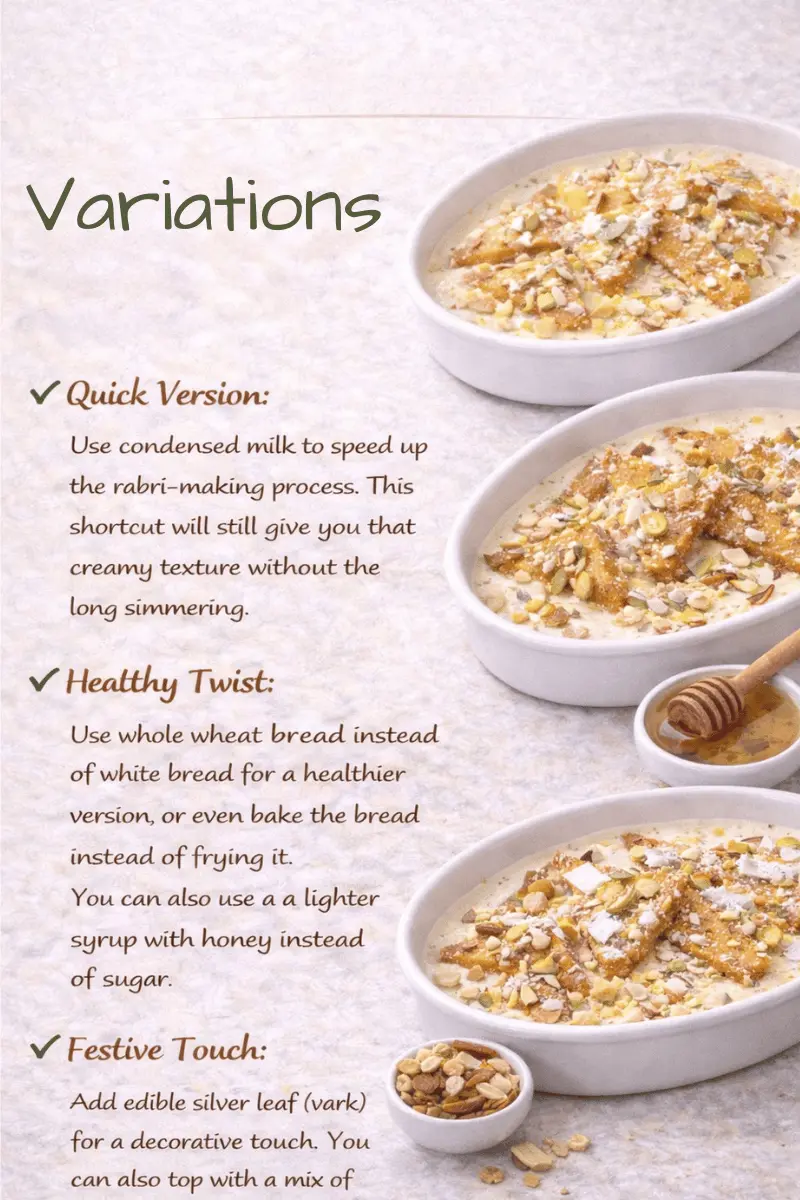
Variations You Can Try
While the classic version of Shahi Tukray is delicious on its own, you can experiment with a few variations to make it your own:
Expert Tips for Best Results
- Fry the bread until crisp: Ensure the bread is fried until golden brown but not too crispy. This way, it will soak up the syrup and rabri without falling apart.
- Use full-fat milk: Full-fat milk helps create a rich and creamy rabri sauce, so don’t skimp on it!
- Serve immediately: For the best experience, serve the dessert as soon as it’s assembled to keep the bread crisp and fresh.
- Use ghee for a traditional taste: While you can use butter or oil, ghee adds an authentic flavor to the dessert that takes it to the next level.
Serving and Storage Guide
Shahi Tukray can be served warm or cold, depending on your preference. If you want to enjoy it at room temperature, allow the bread to cool a bit before serving. If you prefer it chilled, refrigerate it for an hour or so.
- Storing leftovers: If you have any leftovers, store the components separately. Keep the syrup and rabri in airtight containers in the fridge. When you’re ready to serve, reheat the rabri gently and dip the bread into the syrup again before layering them in a serving dish.
- Serving ideas: Shahi Tukray is perfect for family gatherings, Eid celebrations, and weddings. You can also serve it at casual dinner parties to wow your guests with its rich flavor and royal touch.
Nutrition Snapshot
Shahi Tukray is a rich dessert, so it’s best enjoyed as an occasional treat. Here’s a quick breakdown of the nutrition:
- Calories: One serving of Shahi Tukray can have around 300–400 calories, depending on the portion size.
- Macronutrients: It’s high in fats (due to ghee and milk) and carbohydrates (due to sugar and bread). It’s best enjoyed in moderation.
Remember, this is an indulgent dessert, so treat yourself every once in a while!
Final Thoughts — Try It Today!
Shahi Tukray is a delightful, indulgent dessert that brings together the best of Mughlai cuisine in a simple and accessible way. Whether you’re serving it for a festive occasion or simply treating yourself to something special, this dessert is sure to impress. Try it today, and bring a little royal touch to your home kitchen!
Love This Recipe? Check Our Homepage for More!
If you enjoyed making Shahi Tukray, head over to our homepage for more delicious recipes to try. From traditional sweets to innovative twists on old favorites, we have something to satisfy every craving!
FAQs About Shahi Tukray
Looking to make the perfect Shahi Tukray at home or have some questions about this delicious Mughlai dessert? We’ve got you covered! Below, you’ll find answers to the most frequently asked questions to help you create this royal treat in your own kitchen.
What is Shahi Tukray?
Shahi Tukray is a traditional Mughlai dessert made from fried bread soaked in sweet sugar syrup, topped with a creamy rabri (thickened milk sauce) and garnished with nuts. It’s a rich, indulgent treat that originates from South Asia and is perfect for special occasions.
How do I make Shahi Tukray at home?
To make Shahi Tukray, fry bread slices until crispy, then soak them in a sugar syrup flavored with cardamom. Prepare rabri by simmering milk with saffron, sugar, and cardamom. Pour the rabri over the soaked bread and garnish with chopped nuts like pistachios and almonds. It’s a simple yet decadent dessert!
Can I make Shahi Tukray without frying the bread?
Yes, you can make a lighter version by toasting the bread slices in a pan or using an oven instead of deep-frying them. This way, you still get the crispy texture without the added oil from frying.
What kind of bread should I use for Shahi Tukray?
Use white bread or milk bread for the best results. These types of bread absorb the syrup well, giving Shahi Tukray its signature soft and sweet texture. You can also use brioche for a richer flavor.
How long can I store Shahi Tukray?
Shahi Tukray is best enjoyed fresh, but you can store the components separately (bread, syrup, and rabri) in the fridge for 1–2 days. When you’re ready to serve, simply reheat the rabri and dip the bread in warm syrup again.
Can I make Shahi Tukray without sugar syrup?
While sugar syrup is an essential part of Shahi Tukray, you can substitute it with a lighter sweetener like honey or agave syrup for a healthier option. The texture will still be delicious, though it might lack the exact richness of the traditional version.
What can I garnish Shahi Tukray with?
You can garnish Shahi Tukray with a variety of nuts like pistachios, almonds, and cashews. Dried rose petals or edible silver leaf (vark) can also be used for a festive and elegant touch. These garnishes add a delightful crunch and extra flavor






- Be Respectful
- Stay Relevant
- Stay Positive
- True Feedback
- Encourage Discussion
- Avoid Spamming
- No Fake News
- Don't Copy-Paste
- No Personal Attacks
- Be Respectful
- Stay Relevant
- Stay Positive
- True Feedback
- Encourage Discussion
- Avoid Spamming
- No Fake News
- Don't Copy-Paste
- No Personal Attacks
