Easy Omelette Recipe in 7 Steps
Published: 15 Mar 2026
Lets start with ingredients, followed by 7 easy steps for the complete recipe.
Ingredients
You do not need many ingredients to make a delicious omelette. The main goal is to use fresh eggs and keep the seasoning balanced. A classic omelette often starts with 2 or 3 eggs, salt, pepper, and butter. Some cooks add a small spoon of water or milk, though many simple omelette methods work very well without making the eggs too frothy.
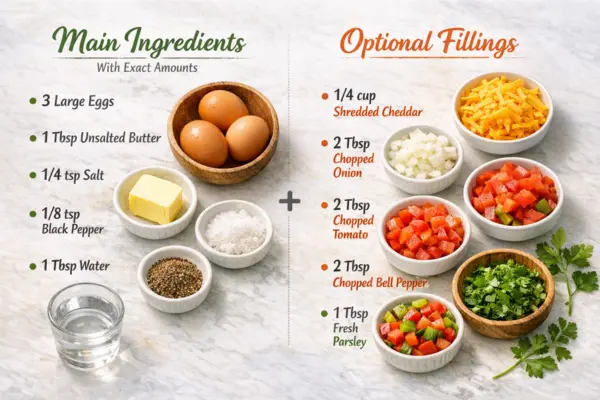
Main Ingredients With Exact Amounts
- 3 large eggs
- 1 tablespoon unsalted butter
- 1/4 teaspoon salt
- 1/8 teaspoon black pepper
- 1 tablespoon water
Optional Filling Ingredients
- 1/4 cup shredded cheddar cheese
- 2 tablespoons finely chopped onion
- 2 tablespoons finely chopped tomato, seeds removed
- 2 tablespoons finely chopped bell pepper
- 1 tablespoon chopped fresh parsley or chives
Kitchen Tools You Need
The right tools make this recipe easier from start to finish. A small non-stick pan is especially helpful because it gives the omelette shape and makes folding much easier. Several step-by-step omelette guides recommend an 8-inch pan for a 2-egg or 3-egg omelette because it helps keep the eggs thick enough to stay tender.
Useful Tools
- 8-inch non-stick frying pan
- Medium mixing bowl
- Fork or small whisk
- Rubber or silicone spatula
- Small knife and chopping board
- Serving plate
Why the Pan Size Matters
A pan that is too large can spread the eggs too thin. When that happens, the omelette cooks too fast and can turn dry before you fold it. A smaller pan helps the eggs stay soft and gives you better control.
Step by Step Recipe Method
This is the core part of the recipe, and it is the section that matters most. Take your time with each step. Omelettes cook quickly, so a calm and steady method will give you the best result. The general method used by trusted recipe sources is simple: whisk the eggs until blended, melt butter in a non-stick pan, cook the eggs gently, add fillings once the eggs are nearly set, then fold and serve right away.
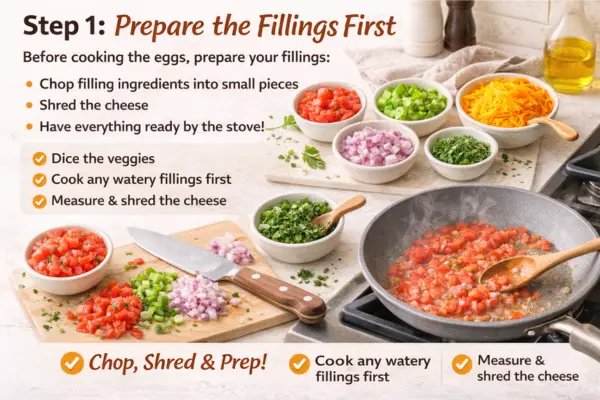
Step 1: Prepare the Fillings First
Before you start cooking the eggs, prepare every filling ingredient. Chop the onion, tomato, bell pepper, and herbs into small pieces. Shred the cheese and keep it close to the stove. If you are using vegetables with a lot of moisture, such as tomatoes or mushrooms, it is best to cook them lightly first or at least remove extra liquid. This keeps the omelette from turning watery. Once the eggs go into the pan, things move fast, so it helps to have everything ready.
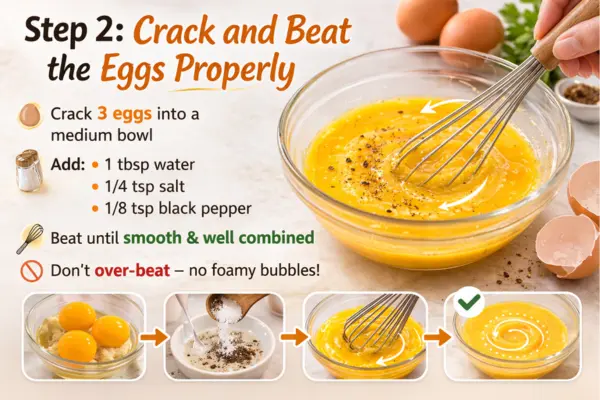
Step 2: Crack and Beat the Eggs Properly
Crack the 3 eggs into a medium bowl. Add the salt, black pepper, and 1 tablespoon of water. Beat the mixture with a fork or small whisk until the yolks and whites are fully combined. The texture should look smooth and even in color. Do not beat until it becomes very foamy. A well-blended mixture cooks more evenly, while overly frothy eggs can affect the final texture. Trusted omelette methods also recommend blending the eggs well but not whipping in too much air.
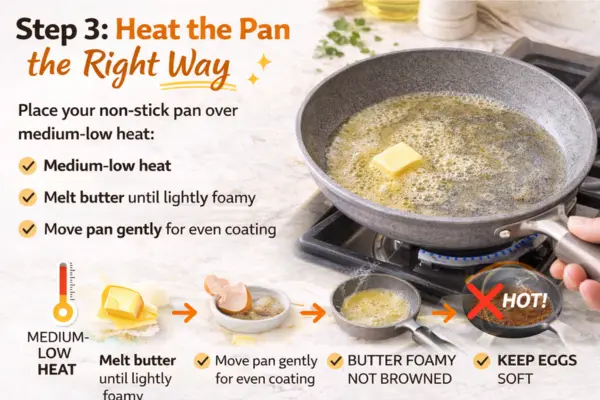
Step 3: Heat the Pan the Right Way
Place your non-stick pan over medium-low heat. Add the butter and let it melt slowly. Move the pan gently so the butter coats the surface. You want the butter melted and lightly foamy, not browned and smoky. Gentle heat is one of the most important parts of a good omelette because it helps the eggs stay soft instead of turning tough. Reliable omelette guides repeatedly recommend medium to medium-low heat, then reducing to low when needed.
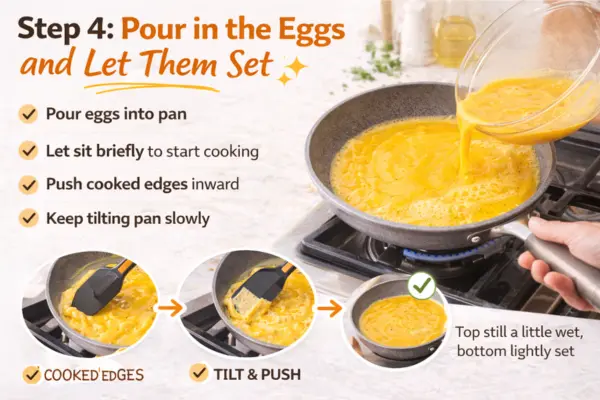
Step 4: Pour in the Eggs and Let Them Set
Pour the beaten eggs into the warm pan. Let them sit for a few seconds so the bottom begins to set. Then use your spatula to gently push the cooked edges toward the center while tilting the pan so the uncooked egg runs into the empty spaces. Keep doing this slowly around the pan. This method helps the omelette cook evenly without scrambling the eggs. The top should still look a little wet while the bottom is lightly set. This is the stage where patience gives you the best texture.
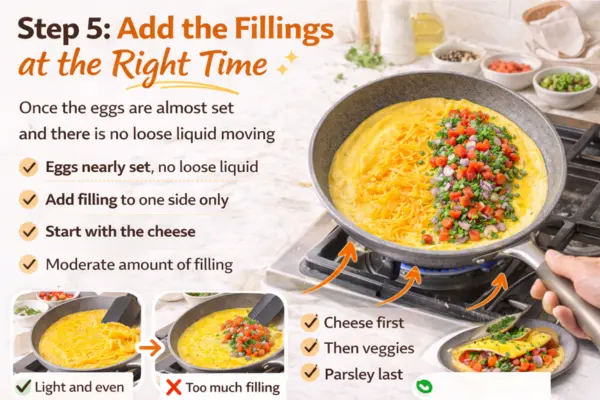
Step 5: Add the Fillings at the Right Time
Once the eggs are almost set and there is no loose liquid moving around the pan, add your fillings to one half of the omelette. Start with the cheese, then add the onion, tomato, and bell pepper. Finish with a little parsley or chives. Keep the filling amount light and even. A heavily filled omelette is harder to fold and more likely to tear. Good omelette instructions often suggest using a moderate amount of filling so the eggs can still hold their shape.
Step 6: Fold the Omelette Gently
Slide the spatula under the empty half of the omelette. Lift it carefully and fold it over the filling side. Press very lightly for a few seconds so it holds its shape. If needed, lower the heat and let it sit for another 20 to 30 seconds. The center should stay soft, and the cheese should begin to melt. You do not want to leave it too long at this point because the eggs continue cooking from the heat in the pan. Several recipe guides note that omelettes are best when the top is just set and still a bit creamy.

Step 7: Slide to a Plate and Serve Immediately
Tilt the pan over a plate and slide the omelette out gently. Add a little more chopped parsley or chives on top if you like. Serve it right away while it is hot and soft. Omelettes are always at their best fresh from the pan. That soft texture and warm center are what make a homemade omelette feel special.

How the Finished Omelette Should Look
A properly cooked omelette should look smooth and lightly golden on the outside. The inside should be soft and moist, not runny and not dry. A good omelette is not meant to be browned all over or cooked until stiff. Some classic omelette guides describe the best texture as soft and slightly creamy in the center.
Signs You Cooked It Well
- The eggs are set but still tender
- The omelette folds without breaking
- The filling stays inside neatly
- The surface looks soft, not dry
- The center tastes warm and fluffy
Variations in the Recipe
One of the best things about an omelette is how easy it is to change the flavor. Once you learn the basic method, you can create many versions at home with ingredients you already have. Keep the base the same and only change the fillings.
Cheese Omelette
This is the simplest variation and one of the most popular. Use 1/4 cup shredded cheddar, mozzarella, or any melting cheese you enjoy. The cheese adds richness and helps the omelette feel more filling.
Vegetable Omelette
Add finely chopped onions, bell peppers, tomatoes, spinach, or mushrooms. If the vegetables release a lot of water, cook them first for a minute or two before adding them to the eggs. This keeps the omelette soft instead of soggy.
Masala Omelette
For a stronger flavor, mix finely chopped onion, green chili, tomato, coriander, and a pinch of red chili powder into the eggs before cooking. This version is full of flavor and works beautifully with toast or flatbread.
Herb Omelette
Use fresh parsley, chives, basil, or dill for a lighter taste. Fresh herbs bring a clean flavor and make the omelette smell wonderful.
Chicken Omelette
Add a few tablespoons of cooked shredded chicken with cheese and herbs. Keep the amount small so the omelette still folds neatly.
Mistakes to Avoid
Even a simple omelette can go wrong when small steps are missed. The most common problems are high heat, too much filling, and overcooking. Trusted cooking sources warn that these mistakes can turn the eggs rubbery, cause the omelette to tear, or make it stick to the pan.
Cooking on Heat That Is Too High
This is one of the biggest mistakes. High heat cooks the outside too fast and leaves you with dry eggs. Keep the heat gentle so the omelette stays soft.
Beating the Eggs Too Much
You want the yolks and whites fully mixed, but you do not want a bowl of foam. Too much air can change the texture and make the eggs cook unevenly.
Using Too Many Fillings
A stuffed omelette sounds tempting, but too much inside makes folding difficult. The omelette may split in the middle or become heavy and wet.
Skipping a Good Non-Stick Pan
If your pan sticks, the omelette will likely tear. A non-stick pan makes a big difference, especially if you are still learning.
Overcooking the Eggs
An omelette keeps cooking even after you take it off the heat. That is why it is best to remove it when the eggs are just set and still soft.
Serving Suggestions
An omelette is satisfying on its own, but it becomes an even better meal when paired with something simple on the side. You do not need anything fancy. The goal is to keep the meal balanced and easy.
Easy Side Ideas
- Buttered toast
- Fresh salad
- Roasted potatoes
- Sliced avocado
- Fresh fruit
- Tea or coffee
Best Way to Serve It
Serve the omelette straight from the pan while it is still hot. If you wait too long, the texture will firm up and you will lose that fresh, soft finish that makes it so enjoyable.
Storage and Reheating Tips
Fresh omelettes always taste best, but you can still save leftovers if needed. Let the omelette cool, then store it in a covered container in the fridge for up to 1 day. Reheat gently in a pan over low heat or for a short time in the microwave. Do not overheat it, or the eggs may become tough.
A Better Option
If possible, prepare your fillings ahead of time and make the omelette fresh when you want to eat. Since it cooks so quickly, this usually gives the best result.
FAQs Section
A lot of home cooks have the same questions when making omelettes for the first time. These answers will help you avoid the most common problems and get a better result.
How many eggs should I use for one omelette?
For one standard omelette, 2 to 3 eggs work best. This amount is commonly used in step-by-step omelette recipes because it gives enough thickness for a soft fold without making the omelette too heavy.
Should I add milk or water to the eggs?
A small amount of water can help the omelette stay light. Some cooks also use a little milk. It is optional, so you can use either method, but keep the amount small so the eggs do not become watery.
Why does my omelette break when I fold it?
This usually happens when the filling is too heavy, the eggs are overcooked, or the pan is not non-stick enough. Keep the filling moderate and fold gently when the eggs are just set.
Why is my omelette rubbery?
A rubbery omelette is usually the result of cooking over heat that is too high or leaving it in the pan too long. Low to medium-low heat gives a much softer texture.
Can I make an omelette without cheese?
Yes, absolutely. Cheese adds richness, but a plain omelette with just salt, pepper, butter, and herbs can still taste excellent.
Can I add raw vegetables directly to the omelette?
You can add very finely chopped soft vegetables, but many vegetables taste better when cooked first. This also removes extra moisture and helps the omelette hold together better.
Conclusion
A homemade omelette is one of those recipes that proves simple food can still be full of flavor. With just a few basic ingredients and the right method, you can make a soft, fluffy, and satisfying meal in minutes. The key is to use gentle heat, avoid overfilling, and stop cooking at the right moment. That is what gives you an omelette that tastes tender and fresh instead of dry.
Once you make it a few times, the process becomes easy and natural. Then you can start trying your own fillings and flavors with confidence. If you enjoyed this recipe, check the homepage for more food recipes and fresh ideas for tasty homemade meals.






- Be Respectful
- Stay Relevant
- Stay Positive
- True Feedback
- Encourage Discussion
- Avoid Spamming
- No Fake News
- Don't Copy-Paste
- No Personal Attacks
- Be Respectful
- Stay Relevant
- Stay Positive
- True Feedback
- Encourage Discussion
- Avoid Spamming
- No Fake News
- Don't Copy-Paste
- No Personal Attacks
