Homemade Sour Cream: A Simple, Creamy Recipe That Tastes Better at Home
Published: 23 Feb 2026
Complete recipe in 7 steps with a dedicated picture and detailed text. Enjoy the recipe, and don’t forget to follow Food Peradise on Pinterest.
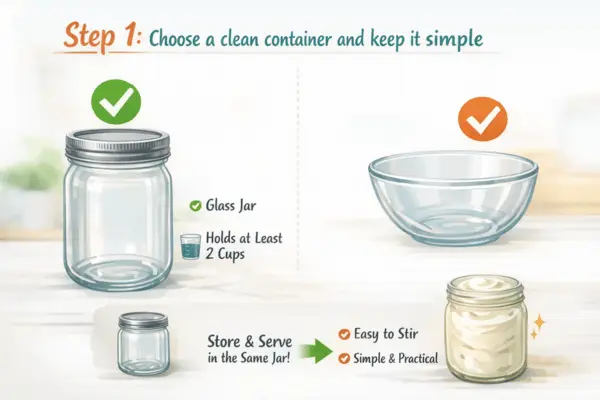
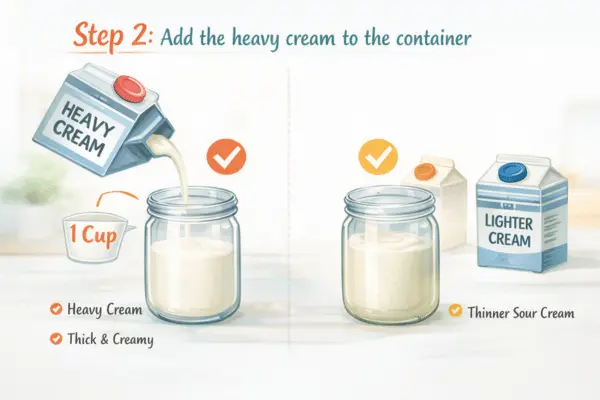
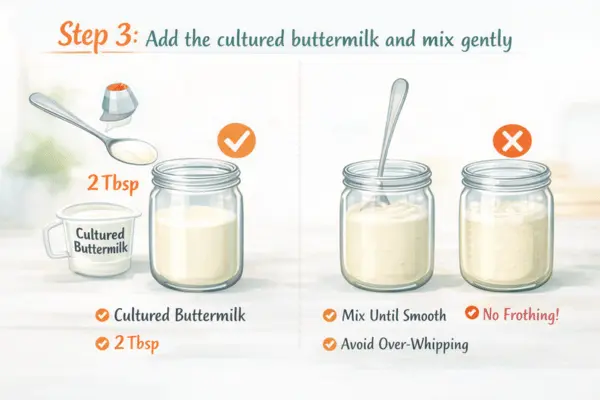
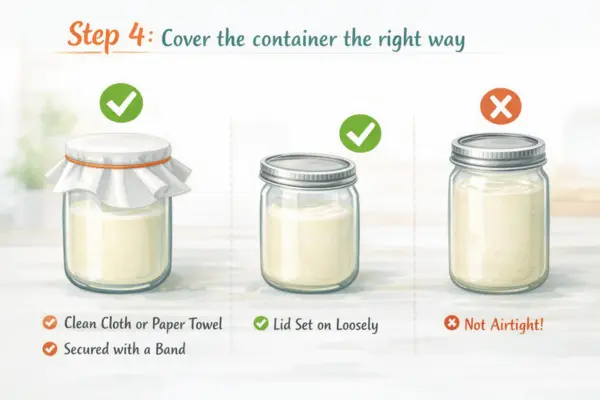
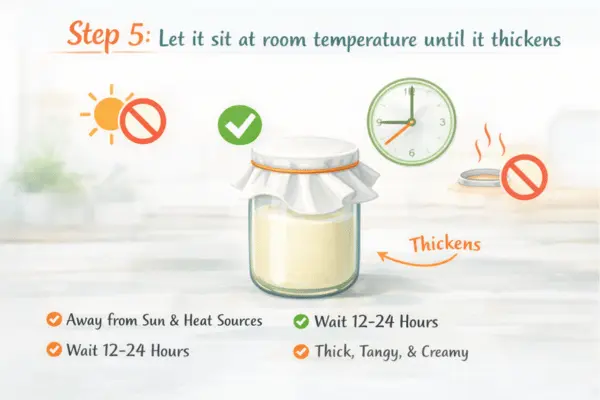
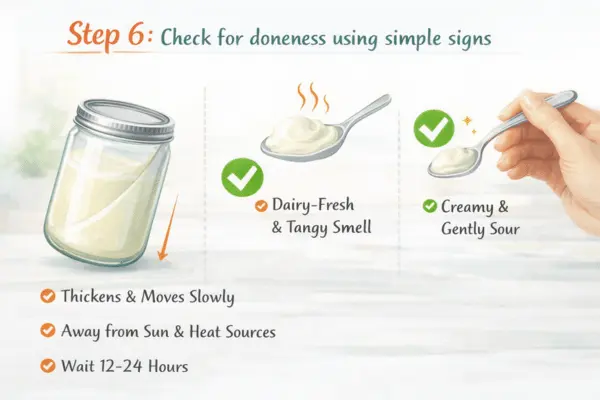
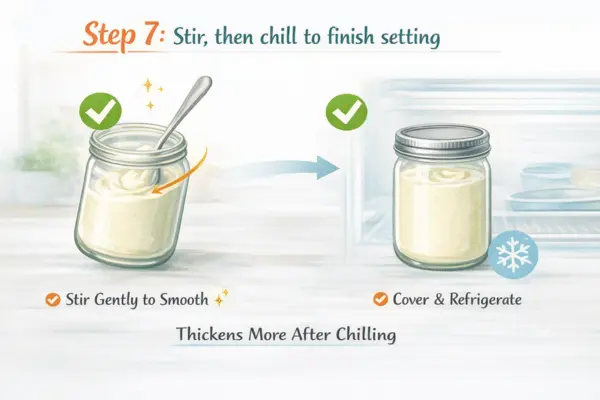
Table of Contents
Ingredients You Need
You do not need a long shopping list. You only need the right basics, and you need to use them with care so your sour cream sets well and tastes clean.
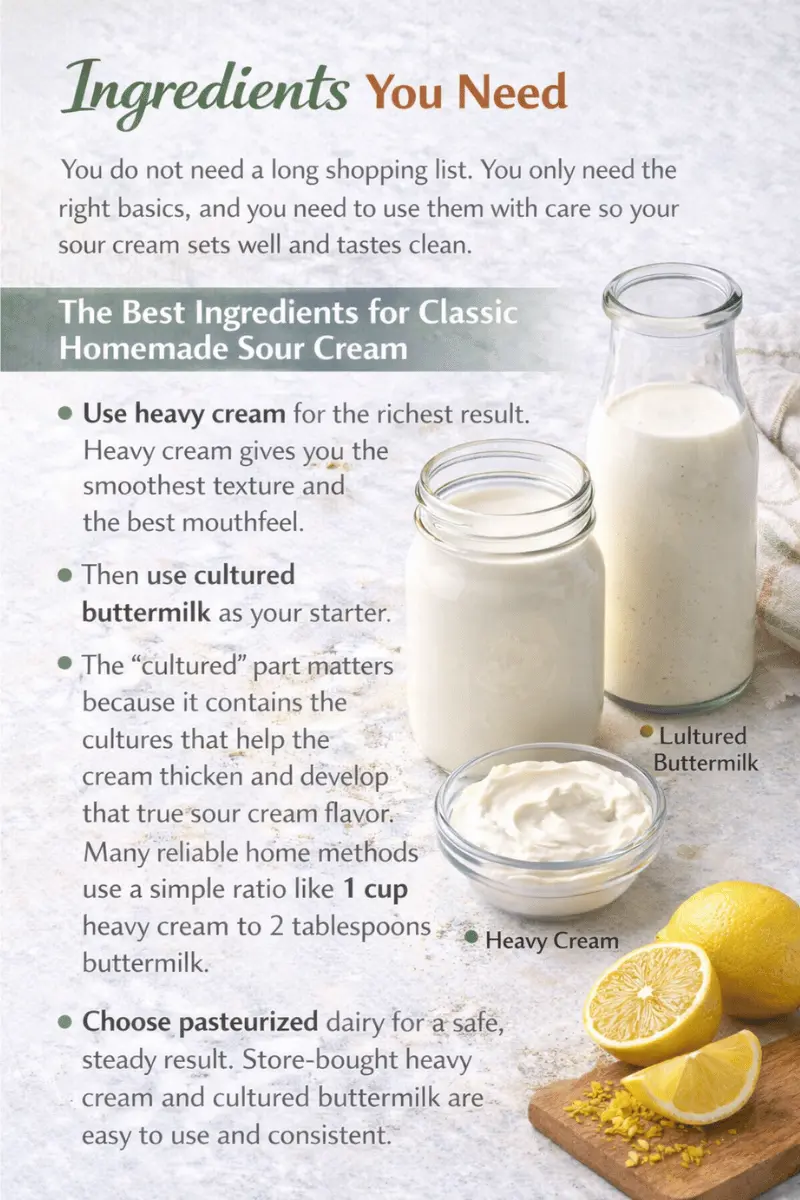
The Best Ingredients for Classic Homemade Sour Cream
Use heavy cream for the richest result. Heavy cream gives you the smoothest texture and the best mouthfeel. Then use cultured buttermilk as your starter. The “cultured” part matters because it contains the cultures that help the cream thicken and develop that true sour cream flavor. Many reliable home methods use a simple ratio like 1 cup heavy cream to 2 tablespoons buttermilk.
Choose pasteurized dairy for a safe, steady result. Store-bought heavy cream and cultured buttermilk are easy to use and consistent.
Method For Classic Cultured Homemade Sour Cream (Core Recipe)
This is the method that most people fall in love with. It produces a thick, spoonable sour cream with a balanced tang and a rich, creamy finish. It also feels like real kitchen craft because you are letting the cream transform gently over time. This is also close to how cultured sour cream is described in dairy education sources, where a culture is added to cream and held warm until it reaches the desired thickness and flavor.
Step 1: Choose a clean container and keep it simple
Use a clean glass jar or bowl that holds at least 2 cups. You want some space for easy stirring and checking later. If you use a jar, you can store the finished sour cream in the same container, which makes cleanup easy.
Step 2: Add the heavy cream to the container
Pour in 1 cup of heavy cream. Try to use heavy cream for a thick result. Lighter cream can work, but it usually makes a thinner sour cream.
Step 3: Add the cultured buttermilk and mix gently
Spoon in 2 tablespoons of cultured buttermilk. Stir with a spoon or whisk until the mixture looks smooth and evenly blended. Mix well, but do not whip air into it. You are not trying to froth the cream. You just want an even mix so it sets consistently.
Step 4: Cover the container the right way
Cover the jar or bowl to keep dust out. Many home methods use a clean cloth or paper towel secured with a band, or a lid set on loosely. This protects the mixture while it thickens at room temperature.
Step 5: Let it sit at room temperature until it thickens
Place the container on a counter away from direct sunlight and heat sources. Let it sit until it becomes thick, creamy, and slightly tangy. In many kitchens, this takes 12 to 24 hours, but it can take longer in cooler rooms. Some guides mention 24 to 48 hours as a typical range for thickening at room temperature.
Step 6: Check for doneness using simple signs
After about 12 hours, take a look. The mixture should look thicker than cream. It should coat a spoon and move slowly when you tilt the jar. Smell it. It should smell pleasantly tangy and dairy-fresh. Then taste a small spoonful. It should taste creamy with a gentle sour note. If it still tastes like plain cream, give it more time.
Step 7: Stir, then chill to finish setting
Once it reaches the thickness and tang you like, stir it gently to smooth it out. Then cover with a proper lid and refrigerate. Chilling helps it set even more and gives it the final sour cream texture. Many home methods point out that it thickens more after chilling.
Step 8: Serve and enjoy
After a few hours in the fridge, your sour cream should be thick, smooth, and spoonable. Use it right away or keep it chilled for later.
Variations Readers Love (Make It Your Own)
Once you master the base recipe, you can customize it in easy ways without making it complicated.
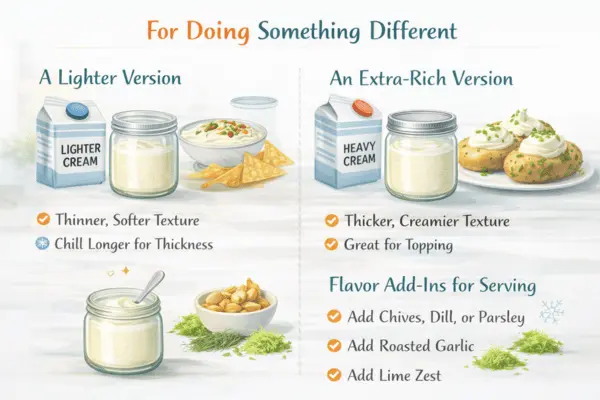
A Lighter Version
You can use lighter cream instead of heavy cream, but expect a thinner texture. If you want it thicker, give it a longer chill time and use it in dips and sauces where texture is less critical.
An Extra-Rich Version
Use heavy cream for the richest finish. It gives you a thick, creamy sour cream that feels like a treat. It also holds up well as a topping because it stays spoonable and smooth.
Flavor Add-Ins for Serving
Add flavor after it is fully set and chilled. Stir in chopped chives, dill, or parsley. Add roasted garlic for a deeper taste. Add lime zest for a fresh taco-night twist. These small changes keep the sour cream smooth while giving you a new flavor each time.
Sour Cream vs. Crème Fraîche vs. Greek Yogurt (So You Choose the Right One)
People often compare these because they look similar and they all add creaminess. The taste and best use can differ.
Cultured dairy products can vary by culture type and fat level, but a simple way to think about it is this: sour cream is tangy and creamy, crème fraîche is often richer and milder, and Greek yogurt is thicker with a stronger tang and a lighter feel. Sour cream is commonly described as cultured cream, while acidified versions also exist in food standards, which helps explain why different tubs can taste slightly different.
Use sour cream when you want that classic tang and a smooth, creamy texture. Use crème fraîche when you want something rich and gentle. Use Greek yogurt when you want a higher-protein option with a sharper tang.
Storage, Shelf Life, and Make-Ahead Tips
Homemade sour cream belongs in the fridge, covered well. A jar with a tight lid works best. Always use a clean spoon each time you scoop some out. This helps it stay fresh longer.
Some cultured cream guides suggest consuming cultured cream within about 10 days, which is a practical, cautious reference for home storage planning. Your exact shelf life can vary based on cleanliness and your fridge temperature, so use that as a helpful guide and rely on smell and appearance too.
The Best Way to Store It
Store it in the coldest part of your fridge, not the door. Keep it covered tightly. Stir gently before serving if you notice slight separation. A little separation can happen. It is usually not a problem. If it smells fine and looks normal, a gentle stir often brings it back together.
Troubleshooting: Fix Common Problems Fast
Most sour cream problems are easy to solve. They usually come down to time, temperature, or ingredients.
It Did Not Thicken
If it stays thin, your kitchen may be too cool, or it may need more time. Give it a few more hours and check again. Also make sure your buttermilk is cultured for the classic method. The cultured starter is what helps it set and develop flavor.
It Turned Out Too Thick
This is not a bad problem. Stir in a small splash of heavy cream to loosen it. Add a little at a time and stir gently until it looks right.
It Tastes Too Sour
That usually means it sat too long at room temperature. Next time, shorten the resting time. For this batch, you can soften the flavor by stirring in a small amount of fresh cream, then chilling it again.
It Looks a Bit Grainy
Graininess can happen if the mixture gets disturbed while it sets, or if it warms too much in one spot. Stir gently after it has set, then chill. Next time, keep it in a steady spot and avoid moving the jar around.
Delicious Ways to Use Homemade Sour Cream
Once you have homemade sour cream in the fridge, you will find reasons to use it all week. It adds richness, smoothness, and a gentle tang that balances spicy, salty, and savory foods.
Easy Everyday Uses
Use it on tacos, burrito bowls, and nachos. Add it to baked potatoes and roasted vegetables. Stir it into chili right before serving. Mix it into dips with herbs, salt, and a squeeze of lemon. Spoon it over grilled chicken or roasted salmon for a creamy finish.
Simple Sauce and Dressing Ideas
Whisk sour cream with a little water or milk, then add salt, pepper, and chopped herbs for a quick drizzle sauce. Mix it with a little mustard and honey for a sweet-tangy dressing. Blend it with lime juice and a pinch of salt for a bright topping for tacos and grilled corn.
Frequently Asked Questions About Homemade Sour Cream
These quick answers cover the questions that come up most when people make sour cream at home.
Can I make sour cream without buttermilk?
Yes. Use the quick method with heavy cream and lemon juice or white vinegar. It is a simple two-ingredient option that works well in many dishes.
How long should cultured sour cream sit out?
Many home methods suggest anywhere from 12 to 48 hours depending on room temperature and the flavor you want. Start checking around 12 hours, then decide based on thickness and taste.
Can I use milk instead of cream?
Milk will not give you the same thick, rich sour cream. You can try it, but it usually stays thin. For a better result, use heavy cream or at least a richer dairy option.
What container works best?
A clean glass jar is ideal because it is easy to cover, easy to chill, and easy to store. A clean bowl also works if you cover it well.
Final Thoughts: Make It Once, and You’ll Want It Every Week
Homemade sour cream is simple, reliable, and rewarding. The cultured method gives you the best taste and texture, and it fits easily into a home routine because the active work is so short. The quick method is a great backup when you need sour cream today. Once you try it, you may stop thinking of sour cream as something you only buy. You will start thinking of it as something you can make whenever you want.
If you enjoyed this recipe and want more tasty ideas you can make at home, check the homepage for more food recipes.

Chocolate Strawberry Mug Cakes (Microwave): Rich Chocolate, Juicy Berries, Ready in Minutes





- Be Respectful
- Stay Relevant
- Stay Positive
- True Feedback
- Encourage Discussion
- Avoid Spamming
- No Fake News
- Don't Copy-Paste
- No Personal Attacks
- Be Respectful
- Stay Relevant
- Stay Positive
- True Feedback
- Encourage Discussion
- Avoid Spamming
- No Fake News
- Don't Copy-Paste
- No Personal Attacks
