Best Lemon Loaf Cake: Moist, Bright, and Glazed Like a Bakery
Published: 23 Feb 2026
Complete recipe in 9 steps with a dedicated picture and detailed text. Enjoy the recipe, and don’t forget to follow Food Peradise on Pinterest.
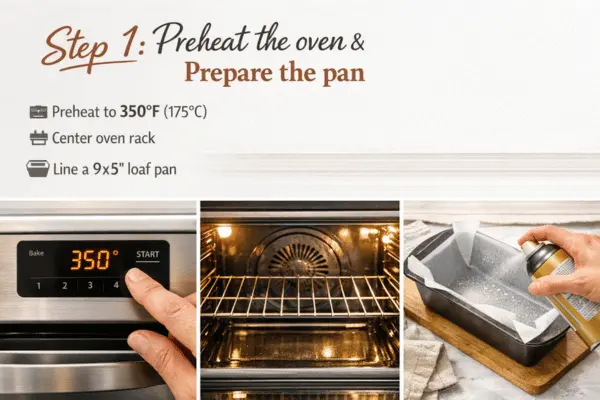

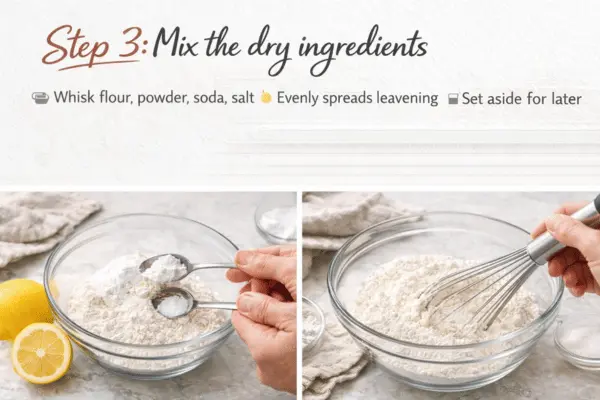
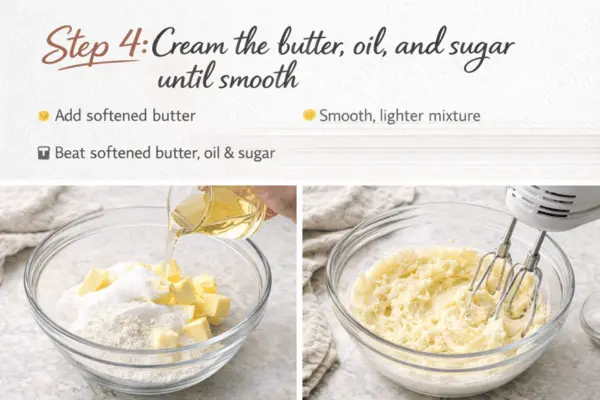
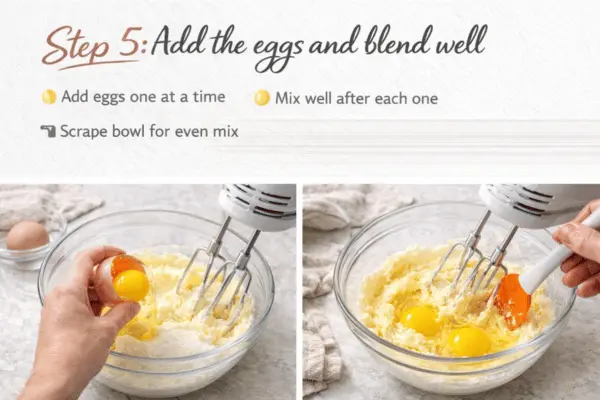

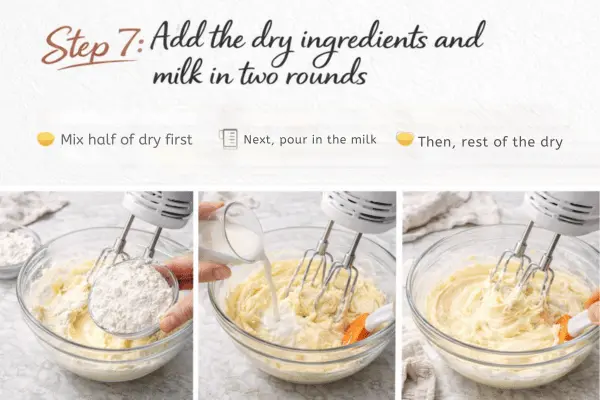
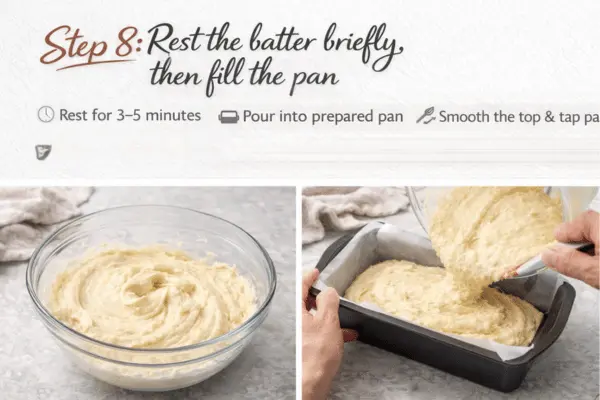
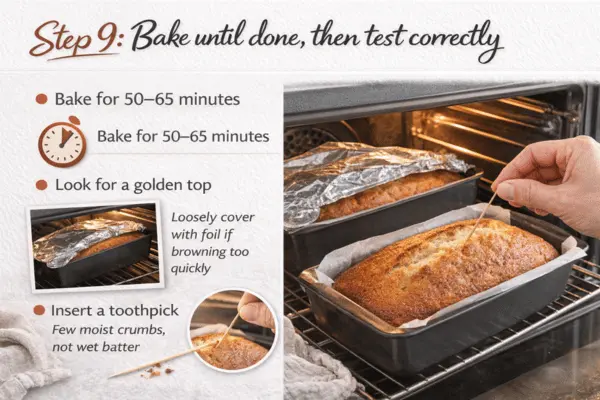
Table of Contents
Best Lemon Loaf Cake Recipe
This is the full recipe you can follow at home. Read through once before you start so you feel relaxed while baking.
Recipe details
Yield: 1 loaf (about 10–12 slices)
Prep time: 15–20 minutes
Bake time: 50–65 minutes
Cool time: 60 minutes (glaze after fully cool)
Ingredients with exact amounts
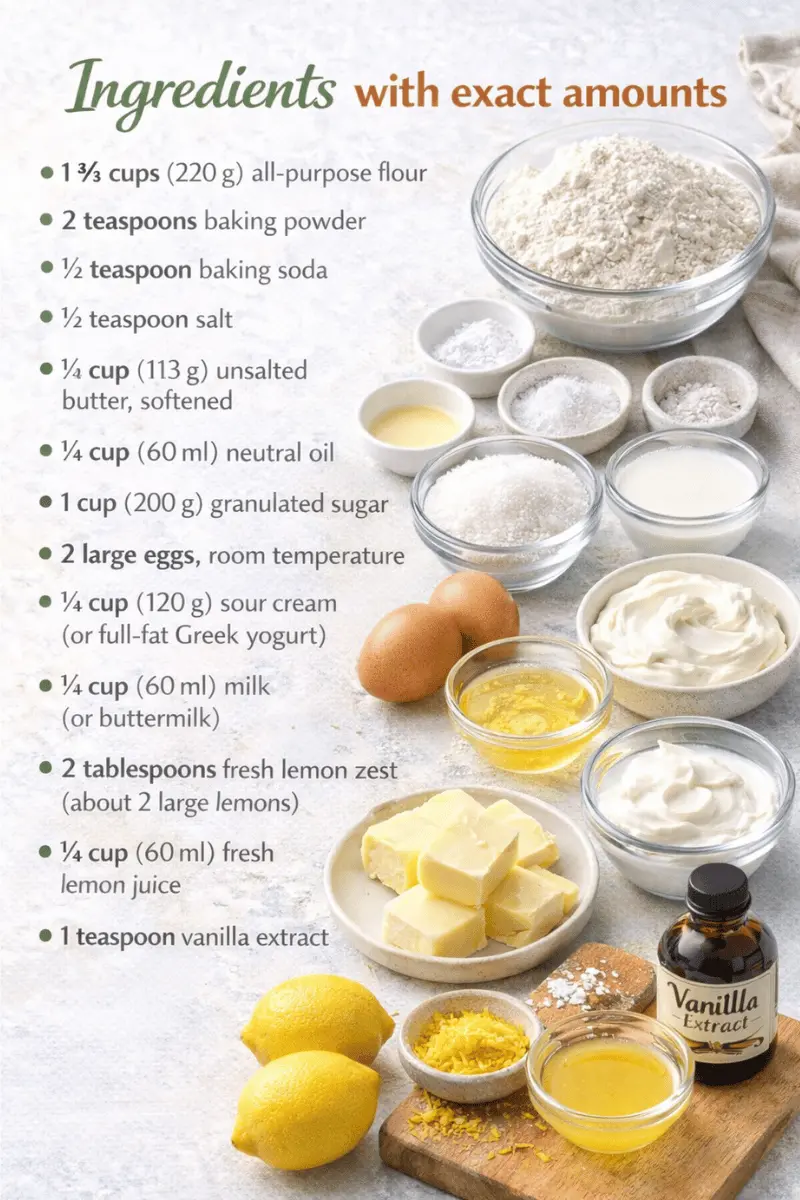
- 1 ¾ cups (220 g) all-purpose flour
- 2 teaspoons baking powder
- ¼ teaspoon baking soda
- ½ teaspoon salt
- ½ cup (113 g) unsalted butter, softened
- ¼ cup (60 ml) neutral oil
- 1 cup (200 g) granulated sugar
- 2 large eggs, room temperature
- ½ cup (120 g) sour cream (or full-fat Greek yogurt)
- ¼ cup (60 ml) milk (or buttermilk)
- 2 tablespoons fresh lemon zest (about 2 large lemons)
- ¼ cup (60 ml) fresh lemon juice
- 1 teaspoon vanilla extract
Recipe Method: Step by Step
This section is the core of the recipe. Follow the steps in order, and you’ll get a moist loaf with a clean rise and a smooth glaze.
Step 1: Preheat the oven and prepare the pan
Preheat your oven to 350°F (175°C). Place the oven rack in the center so the heat surrounds the pan evenly. Line a 9×5-inch loaf pan with parchment paper, letting the paper hang over the two long sides. Lightly grease the pan first so the parchment sticks and doesn’t slide while you pour in the batter.
Step 2: Zest and juice the lemons first
Wash and dry your lemons, then zest them before you squeeze them. Zesting first is easier because the lemon is firm. Zest only the bright yellow part and avoid the white layer underneath, because the white part can taste bitter. After zesting, cut and juice the lemons, then measure the juice so you don’t add too much liquid to the batter.
Step 3: Mix the dry ingredients
In a medium bowl, whisk together the flour, baking powder, baking soda, and salt. Whisking spreads the leavening evenly so the loaf rises the same way from end to end. Set this bowl aside so it’s ready when you need it.
Step 4: Cream the butter, oil, and sugar until smooth
In a large bowl, add the softened butter, oil, and sugar. Beat them together until the mixture looks smooth and a little lighter. This step helps the loaf feel tender and gives the crumb a neat, even texture. If your butter is too cold, it won’t blend well, so let it soften before you start.
Step 5: Add the eggs and blend well
Add the eggs one at a time, mixing well after each one. Scrape down the sides of the bowl so everything mixes evenly. This step matters because eggs help hold the loaf together, and an even mixture gives you a better rise and cleaner slices.
Step 6: Add sour cream, lemon zest, lemon juice, and vanilla
Add the sour cream, lemon zest, lemon juice, and vanilla extract. Mix until the batter looks creamy and smooth. At this stage, the batter should smell strongly of lemon from the zest. If you want a brighter lemon taste, add a little more zest instead of adding extra juice, because zest adds flavor without thinning the batter.
Step 7: Add the dry ingredients and milk in two rounds
Add about half of the dry ingredients to the wet mixture and mix gently until you still see a little flour. Pour in the milk and mix just until it blends in. Add the remaining dry ingredients and mix slowly until the flour disappears. Stop as soon as you no longer see dry streaks. Overmixing is one of the main reasons loaf cakes turn dense, so keep this step calm and gentle.
Step 8: Rest the batter briefly, then fill the pan
Let the batter rest for 3–5 minutes in the bowl. This short rest helps the flour hydrate and can lead to a more even crumb. Pour the batter into your prepared loaf pan and smooth the top with a spoon or spatula. Tap the pan lightly on the counter once or twice to release big air pockets.
Step 9: Bake until done, then test correctly
Bake for 50–65 minutes. Start checking around the 50-minute mark, but do not open the oven much earlier because the loaf is still setting. The top should look golden, and a toothpick inserted near the center should come out with a few moist crumbs, not wet batter. If the top is browning too quickly while the center still needs time, loosely cover the loaf with foil for the last 10–15 minutes so it finishes baking without getting too dark.
Step 10: Cool the loaf the right way
Let the loaf cool in the pan for 10–15 minutes. This helps it firm up so it doesn’t break when you lift it out. Then use the parchment “handles” to lift the loaf onto a cooling rack. Let it cool fully before glazing. If you glaze while warm, the glaze will melt and slide off, and you’ll lose that neat bakery finish.
Easy Variations That Still Taste Amazing
Once you bake the classic version, it’s fun to try a few twists. Keep the base batter the same and add one change at a time so the loaf still bakes evenly.
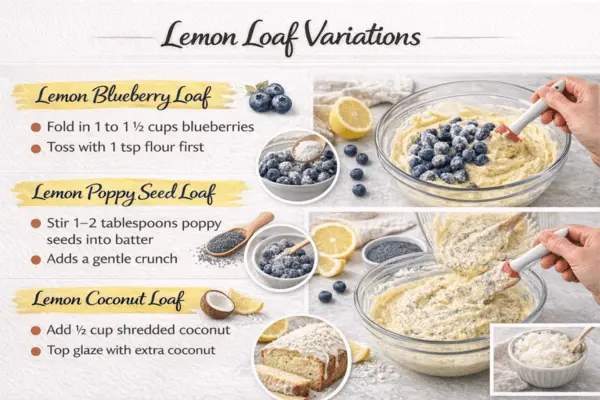
Lemon blueberry loaf
Fold in 1 to 1 ½ cups blueberries. Toss them with a teaspoon of flour first so they stay more evenly spread and don’t sink as much.
Lemon poppy seed loaf
Stir 1–2 tablespoons poppy seeds into the batter with the dry ingredients. Poppy seeds add a gentle crunch and pair perfectly with the glaze.
Lemon coconut loaf
Add ½ cup shredded coconut to the batter. For a stronger coconut feel, top the glaze with a little extra coconut once it sets.
Troubleshooting: Fix Common Lemon Loaf Problems
Even good bakers run into loaf cake problems sometimes. Here are the common ones and what to do next time.
Why did my loaf sink in the middle?
A loaf usually sinks when the center is underbaked or when the batter has too much lift for its structure. Bake until the center is truly set, and avoid opening the oven early. Also check that your baking powder is fresh, because old baking powder can cause uneven rise.
Why is my lemon loaf dry?
Dry loaf usually means too much flour or too much bake time. Measure flour carefully, and start checking early if your oven runs hot. Sour cream helps a lot, and brushing a light lemon syrup can protect moisture if you like that style.
Why is the texture gummy or heavy?
A gummy loaf can come from overmixing or from not baking long enough. Mix gently after adding flour, and let the loaf bake until the center passes the toothpick test. Also let the loaf cool fully before slicing, because the crumb keeps setting as it cools.
Is a cracked top a bad sign?
A crack on top is normal for loaf cakes. It happens as the top sets and the inside keeps rising. Many bakery loaves have a crack, and it can look beautiful once you add glaze.
Storage and Freezing
A good lemon loaf should stay soft for days, and storing it the right way helps keep the crumb moist.
Store the loaf at room temperature in an airtight container or wrapped well in plastic wrap for up to 3–4 days. If your kitchen is warm, you can refrigerate it, but let slices come to room temperature before eating so the texture feels soft again.
For freezing, wrap the unglazed loaf tightly in plastic wrap, then wrap again in foil, and freeze for up to 2 months. Thaw at room temperature, then glaze before serving for the best finish. You can also freeze individual slices, which makes it easy to grab a treat whenever you want.
Frequently Asked Questions
These quick answers help you bake with confidence, even if you’re making lemon loaf for the first time.
Can I use bottled lemon juice?
Fresh lemon juice tastes brighter and cleaner, so it gives the best result. Bottled juice can work in a pinch, but use fresh zest if possible because zest is where the best lemon flavor lives.
Can I make this in mini loaf pans?
Yes, mini loaves work very well. Fill each pan about two-thirds full and start checking earlier, because smaller loaves bake faster.
Can I turn this into muffins?
Yes, this batter makes great muffins. Bake at the same temperature and start checking around 18–22 minutes. Glaze them once fully cool for the cleanest look.
How do I keep the glaze from soaking in?
Make sure the loaf is fully cool and the glaze is thick enough. If the glaze is too thin or the loaf is warm, it will melt and disappear into the surface.
Final Notes for the Best Results Every Time
If you want the best lemon loaf cake, focus on zest, gentle mixing, and the right bake time. Don’t rush the cooling step, because that is when the crumb becomes its best and the glaze sets like a bakery finish. Once you bake it once, you’ll feel how easy it is to repeat.
For more tasty, home-friendly bakes and meals, check the homepage for more food recipes and pick your next favorite.






- Be Respectful
- Stay Relevant
- Stay Positive
- True Feedback
- Encourage Discussion
- Avoid Spamming
- No Fake News
- Don't Copy-Paste
- No Personal Attacks
- Be Respectful
- Stay Relevant
- Stay Positive
- True Feedback
- Encourage Discussion
- Avoid Spamming
- No Fake News
- Don't Copy-Paste
- No Personal Attacks
