Orange Olive Oil Cake Recipe in 10 Easy Steps
Published: 16 Mar 2026
Read carefully about these ingredients, written with the exact amount needed to get started.
Ingredients with Exact Amount
Before you begin, gather all your ingredients and measure them carefully. Good baking starts with good preparation. Fresh oranges make a big difference here, so use real orange zest and juice for the best result. Also, choose an olive oil with a mild and smooth flavor. A very strong one can overpower the cake.
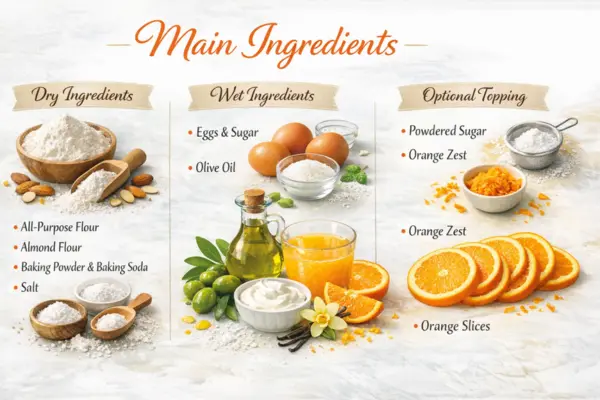
Dry Ingredients
- 1 1/2 cups all-purpose flour
- 1/2 cup almond flour
- 2 teaspoons baking powder
- 1/4 teaspoon baking soda
- 1/2 teaspoon salt
Wet Ingredients
- 3 large eggs
- 1 cup granulated sugar
- 1/2 cup extra-virgin olive oil
- 3/4 cup fresh orange juice
- 2 tablespoons orange zest
- 1/2 cup plain Greek yogurt
- 1 teaspoon vanilla extract
Optional Topping
- 2 tablespoons powdered sugar, for dusting
- 1 tablespoon orange zest, for garnish
- Thin orange slices, for serving if desired
Kitchen Tools You Will Need
This recipe does not ask for anything complicated, which makes it perfect for home bakers. A few basic kitchen tools are enough to make the whole process simple and smooth. It helps to set everything out before you begin so you can move through the method without rushing.

Basic Tools
- 9-inch round cake pan or springform pan
- Large mixing bowl
- Medium mixing bowl
- Whisk
- Spatula
- Measuring cups and spoons
- Microplane or fine grater for orange zest
- Juicer or reamer
- Parchment paper
- Wire rack for cooling
Step by Step Recipe Method
This is the heart of the recipe, and each step matters. Take your time, follow the method in order, and do not rush the mixing. A cake like this is simple, but small details make a big difference. The goal is a batter that is smooth, well mixed, and not overworked. That is what gives you a cake that bakes up soft, fragrant, and beautifully moist.
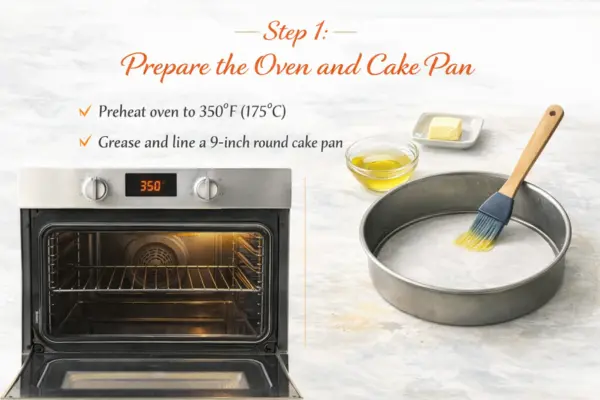
Step 1: Prepare the Oven and Cake Pan
Start by preheating your oven to 350°F (175°C). It is important to let the oven fully heat before the cake goes in, because a steady temperature helps the cake rise evenly and bake properly from the beginning.
Next, prepare your 9-inch round cake pan. Grease the bottom and sides lightly with oil or a little butter. Then place a circle of parchment paper on the bottom of the pan. This simple step makes it much easier to remove the cake later without sticking or breaking. If you are using a springform pan, still line the base so the cake releases cleanly.
Once the pan is ready, set it aside and move on to the batter. Having the oven hot and the pan prepared before mixing is always a smart baking habit.
Step 2: Mix the Dry Ingredients
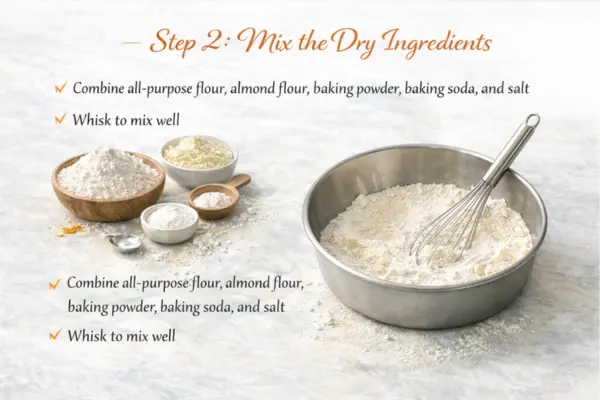
Take a medium bowl and add the all-purpose flour, almond flour, baking powder, baking soda, and salt. Whisk them together until the mixture looks even and well combined.
This step may seem basic, but it is very important. Whisking the dry ingredients first spreads the leavening evenly through the flour. That helps the cake rise properly and keeps you from getting uneven patches in the crumb. It also helps break up small lumps, especially in the almond flour.
Once mixed, set the bowl aside. You will add these dry ingredients to the wet mixture a little later.
Step 3: Prepare the Orange Sugar
In a large mixing bowl, add the granulated sugar and orange zest. Use your fingertips to rub the zest into the sugar for about 1 minute. The sugar will start to feel a little damp and smell strongly of fresh orange.
Do not skip this step. Rubbing the zest into the sugar helps release the natural oils from the orange peel. That is where much of the real orange flavor lives. This small step gives the cake a deeper citrus aroma and makes the final result taste more vibrant and homemade.
When the sugar smells bright and fragrant, you are ready to add the other wet ingredients.

Step 4: Whisk the Eggs and Sugar
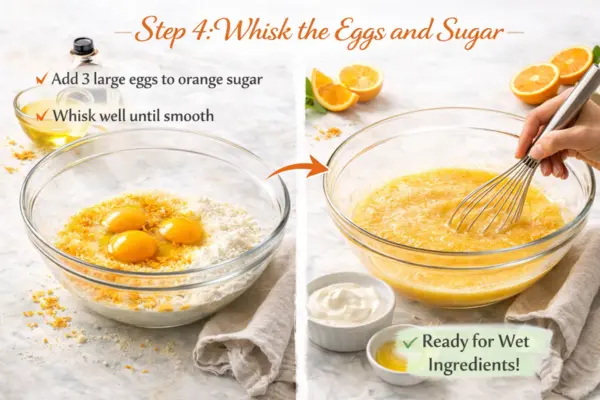
Crack the eggs into the bowl with the orange sugar. Whisk well until the mixture looks smooth and slightly lighter in color. You do not need an electric mixer for this. A hand whisk works perfectly. Just make sure the eggs and sugar are fully blended.
Whisking well at this stage helps create a smooth base for the batter. It also helps the sugar begin to dissolve, which supports a soft and even cake texture. Take a little care here, because a good start makes the rest of the mixing easier.
Step 5: Add the Olive Oil, Orange Juice, Yogurt, and Vanilla
Slowly pour in the olive oil while whisking. This helps it blend smoothly into the egg mixture. After that, add the fresh orange juice, Greek yogurt, and vanilla extract. Continue whisking until the mixture looks creamy, glossy, and fully combined.
At this point, the batter base should smell fresh and rich. The olive oil should not sit on top or look separated. The yogurt should blend in fully, leaving you with a smooth liquid mixture. If your ingredients were at room temperature, this step will go much more easily.
Take a quick look at the texture. It should be fluid and smooth, with no lumps from the yogurt.

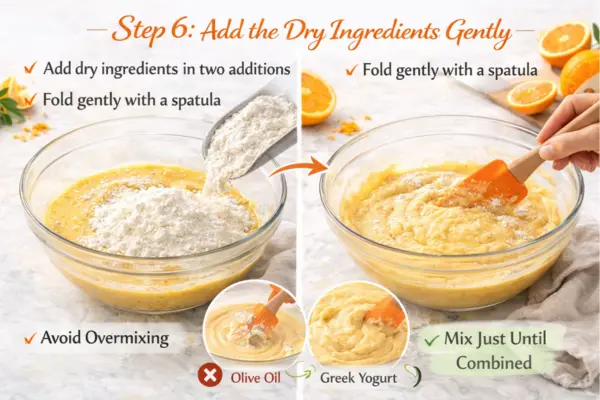
Step 6: Add the Dry Ingredients Gently
Now add the dry ingredients to the wet mixture in two parts. Use a spatula to fold them in gently. After the first addition, fold until most of the flour disappears, then add the rest and continue folding.
Do not beat the batter hard and do not overmix. This is one of the most important parts of the recipe. Once flour is added, too much mixing can make the cake heavy or dense. Fold just until there are no dry streaks left. The batter should look smooth, thick, and easy to pour.
If you notice a few tiny lumps, that is fine. It is much better to stop early than to keep mixing too much.
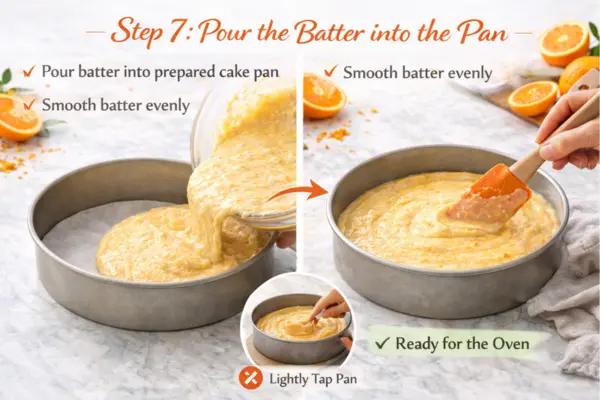
Step 7: Pour the Batter into the Pan
Pour the finished batter into your prepared cake pan. Use the spatula to scrape the bowl well so none of the mixture is wasted. Smooth the top gently so the batter sits evenly in the pan.
This helps the cake bake more evenly and gives you a nicer shape once it is done. Tap the pan lightly on the counter once or twice to release any large air bubbles, but do not bang it too hard. The batter is now ready for the oven.
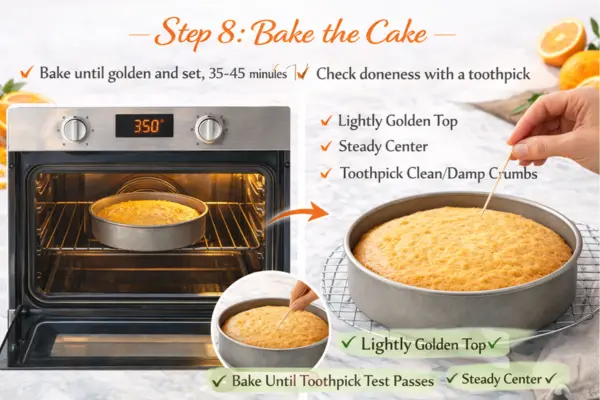
Step 8: Bake the Cake
Place the pan in the center of the preheated oven and bake for 35 to 45 minutes. The exact time can vary a little depending on your oven, so begin checking around the 35-minute mark.
You will know the cake is ready when the top looks lightly golden and set, the center springs back gently when touched, and a toothpick inserted in the middle comes out clean or with a few moist crumbs. If the toothpick shows wet batter, bake for a few more minutes and check again.
Try not to open the oven too often during the first part of baking. Opening the door too early can affect the rise. Once the cake looks mostly set, it is fine to check for doneness.
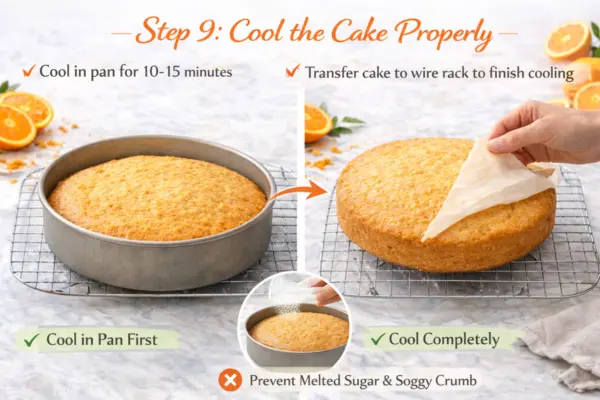
Step 9: Cool the Cake Properly
Remove the cake from the oven and place the pan on a wire rack. Let it cool in the pan for 10 to 15 minutes. This resting time helps the structure settle, which makes the cake easier to remove without cracking.
After that, run a knife gently around the edge if needed, then turn the cake out carefully onto the rack. Peel off the parchment paper and let the cake cool completely.
Cooling fully matters more than many people think. If you add powdered sugar while the cake is still warm, it can melt and disappear. If you slice too early, the crumb may seem more delicate than it really is. Give the cake time to finish setting.
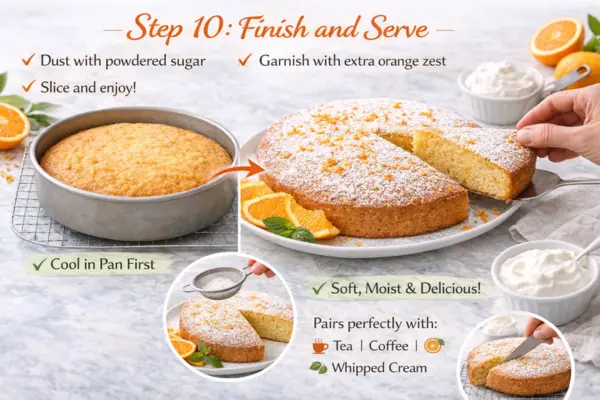
Step 10: Finish and Serve
Once the cake is completely cool, dust the top lightly with powdered sugar. You can also add a little extra orange zest for color and fresh flavor. If you want a pretty serving idea, place a few thin orange slices on the side of the platter.
Slice the cake with a sharp knife and serve at room temperature. The texture will be soft, moist, and tender, with a gentle richness from the olive oil and a bright finish from the orange. This cake pairs beautifully with tea, coffee, or even a spoonful of lightly whipped cream.
Variations in the Recipe
One of the best things about this cake is how easy it is to adjust while keeping the same soft texture and citrus flavor. Once you make the classic version, you can try small changes based on what you have at home or the kind of flavor you want to serve. These variations still keep the recipe simple and home-friendly.
Orange Almond Olive Oil Cake
If you want a nuttier flavor and a slightly more delicate crumb, increase the almond flour to 3/4 cup and reduce the all-purpose flour to 1 1/4 cups. You can also add 1/4 teaspoon almond extract for a stronger almond note. This version feels a little more bakery-style and pairs wonderfully with coffee.
Lemon and Orange Version
For a brighter citrus taste, replace 1/4 cup of the orange juice with fresh lemon juice. This gives the cake a sharper and fresher finish. It is a lovely choice if you enjoy cakes that taste a little less sweet and a little more lively.
Spiced Orange Olive Oil Cake
If you want a warmer flavor, add 1/2 teaspoon ground cardamom or 1/2 teaspoon cinnamon to the dry ingredients. Cardamom gives the cake a soft fragrant note, while cinnamon makes it feel cozy and comforting. Both work very well with orange.
Yogurt-Free Version
If you do not have Greek yogurt, you can use the same amount of sour cream. You can also use whole milk in a pinch, though the texture may be slightly lighter and less rich. Sour cream is the best swap if you want the closest result.
Simple Orange Glaze
If you want a sweeter finish, make a quick glaze by mixing 3/4 cup powdered sugar with 1 to 2 tablespoons of fresh orange juice. Stir until smooth, then drizzle it over the fully cooled cake. This adds shine, sweetness, and extra orange flavor without making the cake too heavy.
Mistakes to Avoid
Even a simple cake can go wrong if a few important details are missed. The good news is that these mistakes are easy to avoid once you know what to watch for. A little care at each stage will help you get a soft, moist, and flavorful cake every time.
Using Olive Oil That Is Too Strong
Olive oil is one of the key flavors in this cake, so the kind you choose matters. If the oil tastes very bitter, peppery, or heavy, that strong flavor may take over the cake. Use a mild and smooth extra-virgin olive oil for the best balance.
Skipping the Orange Zest
Orange juice adds freshness, but the zest gives the strongest orange aroma. If you leave it out, the cake can taste flatter and less exciting. Always use both if you want a full citrus flavor.
Overmixing the Batter
This is one of the most common reasons cakes turn out dense. Once the flour goes in, mix gently and only until combined. Overmixing can develop too much structure in the batter, which leads to a heavier crumb.
Overbaking the Cake
Even a moist batter can dry out if it stays in the oven too long. Start checking the cake early and remove it as soon as the center is baked through. A few moist crumbs on the toothpick are perfectly fine.
Using Cold Ingredients
Cold eggs and cold yogurt do not mix as smoothly into the batter. They can make the mixture look uneven and slightly heavy. Let the eggs and yogurt sit out for a bit before you begin so they blend more easily.
Removing the Cake Too Soon
If you try to remove the cake from the pan the moment it comes out of the oven, it may break or stick. Let it rest first so the structure can settle. Those 10 to 15 minutes of cooling in the pan really help.
Serving Suggestions
This cake is simple, but it feels special in many different settings. That is one reason I enjoy making it so much. It fits just as easily on a casual family table as it does at a small gathering with guests.
Easy Ways to Serve It
- Serve it with hot tea or coffee in the afternoon
- Add a spoonful of lightly whipped cream on the side
- Pair it with fresh berries for a light dessert
- Serve it after dinner when you want something sweet but not too heavy
- Add a little orange zest on top just before serving for extra freshness
If you are serving guests, place the whole cake on a simple platter with a dusting of powdered sugar and a few orange slices around it. It looks beautiful without much effort.
How to Store Orange Olive Oil Cake
A good homemade cake should stay soft after the first day, and this one does exactly that. Olive oil helps the crumb stay moist, which makes it a great make-ahead dessert for home bakers.
At Room Temperature
Store the cake in an airtight container at room temperature for up to 3 days. Keep it in a cool part of the kitchen, away from direct heat or sunlight. If the weather is very warm, refrigeration may be better.
In the Refrigerator
You can store the cake in the fridge for up to 5 days. Make sure it is covered well so it does not dry out. Before serving, let it come back to room temperature. The texture is always better when the cake is not cold.
In the Freezer
If you want to freeze it, wrap individual slices or the whole cake tightly in plastic wrap and then in foil or a freezer-safe bag. Freeze for up to 2 months. Thaw at room temperature before serving.
FAQs
This section covers the most common questions home bakers have when making this recipe. If you are trying this cake for the first time, these answers will help you feel more prepared.
What does orange olive oil cake taste like?
It tastes fresh, soft, and lightly rich. The orange gives it a bright citrus flavor, while the olive oil adds moisture and a gentle depth that makes the cake feel smooth and satisfying.
Can I use regular oil instead of olive oil?
Yes, you can use a neutral oil if needed, but the cake will lose part of its special character. Olive oil gives the cake its signature flavor and texture, so it is worth using if possible.
Can I make this cake without almond flour?
Yes, you can replace the almond flour with the same amount of all-purpose flour. The texture may be a little less delicate, but the cake will still bake well and taste lovely.
What kind of oranges should I use?
Use fresh, sweet oranges that smell fragrant and have a bright peel. Juice oranges or navel oranges both work well. Since you need both zest and juice, choose oranges with clean, firm skin.
Can I make this cake ahead of time?
Yes, and that is one of the nice things about it. The cake tastes wonderful the day it is made, but it is also excellent the next day after the flavors settle. Just store it well so it stays moist.
Why did my cake turn out dense?
A dense cake is often caused by overmixing, overbaking, or using ingredients that were too cold. Measure carefully, fold gently, and check the cake a little early so it stays soft.
Conclusion
This orange olive oil cake is the kind of recipe every home baker should keep close. It is simple, reliable, and full of real flavor. The fresh orange gives it brightness, the olive oil keeps it tender, and the easy method makes it a pleasure to bake from start to finish. It is a beautiful cake without needing anything fancy, and that is exactly why it works so well.
Whether you bake it for family, guests, or a quiet afternoon at home, this cake brings a lovely balance of comfort and freshness to the table. Try it once, and it may become one of those recipes you return to again and again. If you enjoyed this recipe, make sure to check the homepage for more food recipes, baking inspiration, and tasty ideas for your next homemade treat.




- Be Respectful
- Stay Relevant
- Stay Positive
- True Feedback
- Encourage Discussion
- Avoid Spamming
- No Fake News
- Don't Copy-Paste
- No Personal Attacks
- Be Respectful
- Stay Relevant
- Stay Positive
- True Feedback
- Encourage Discussion
- Avoid Spamming
- No Fake News
- Don't Copy-Paste
- No Personal Attacks
