Shakshuka Recipe
Published: 8 Mar 2026
Complete recipe in 8 steps with a dedicated picture and detailed text. Enjoy baking, and don’t forget to follow Food Paradise on Pinterest.
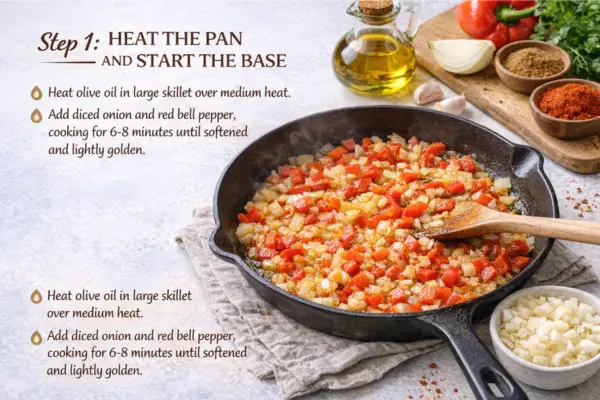
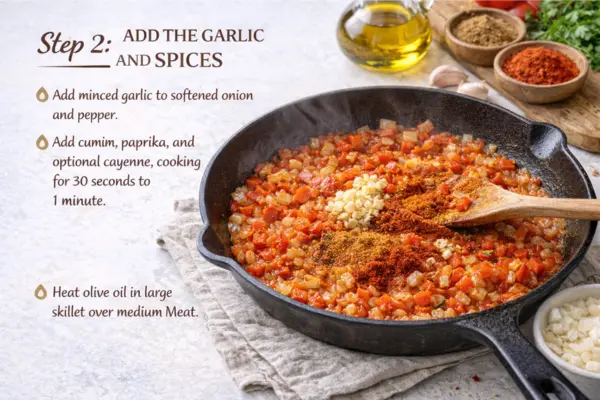
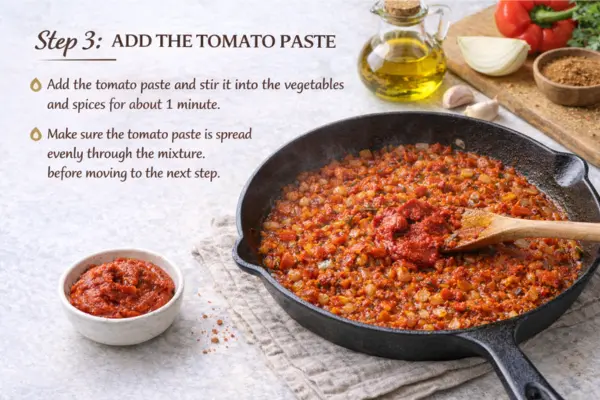
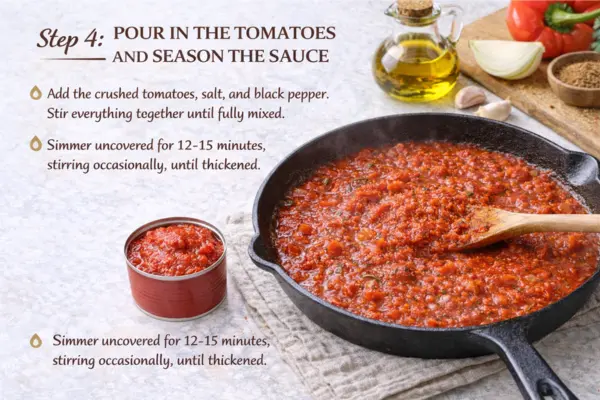
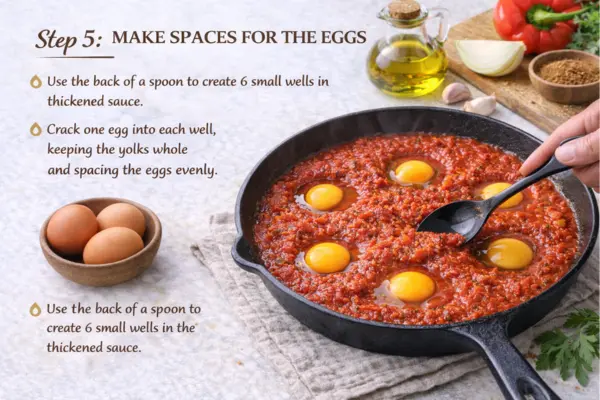
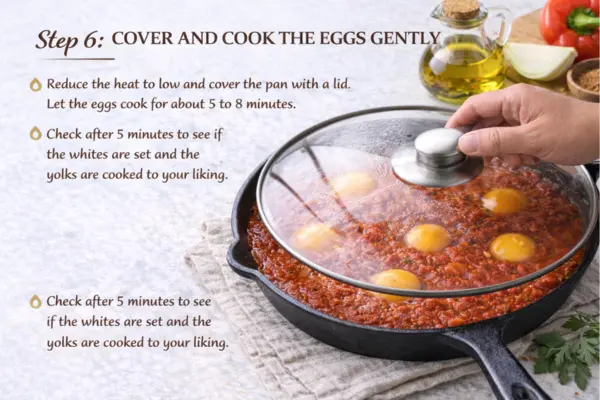
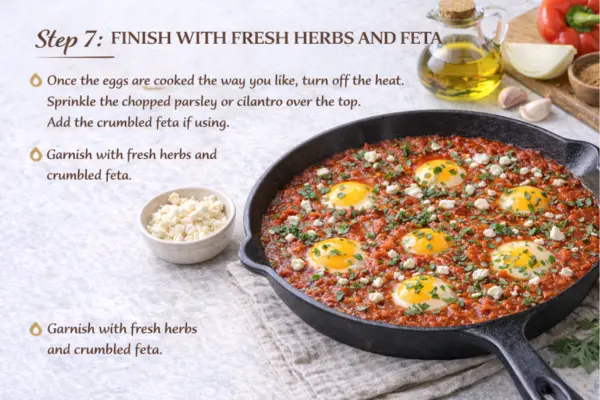
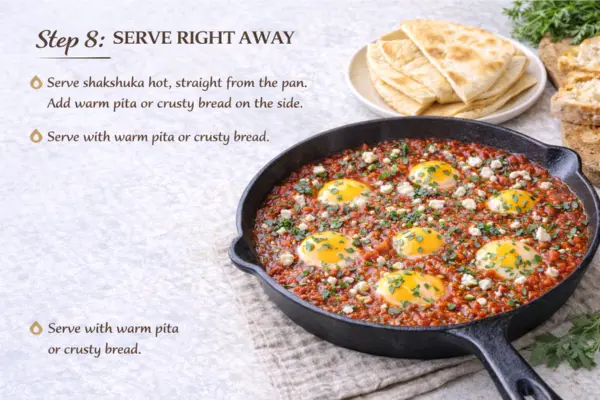
Table of Contents
What Readers Can Expect
This shakshuka recipe is written for real home cooking. The goal is to help you make a dish that tastes bold and comforting without confusion or guesswork. You will get exact ingredient amounts, a clear step-by-step method, helpful variations, and practical advice that makes the recipe easier to follow with confidence.
In This Post, You Will Learn
- What shakshuka is and why it is so loved
- The exact ingredients you need for a balanced, tasty pan
- How to build a rich tomato base with the right texture
- How to cook the eggs so the whites set well and the yolks stay as soft as you like
- Easy ways to change the recipe to match your taste
- The common mistakes that can make shakshuka watery, flat, or overcooked
Ingredients with Exact Amount
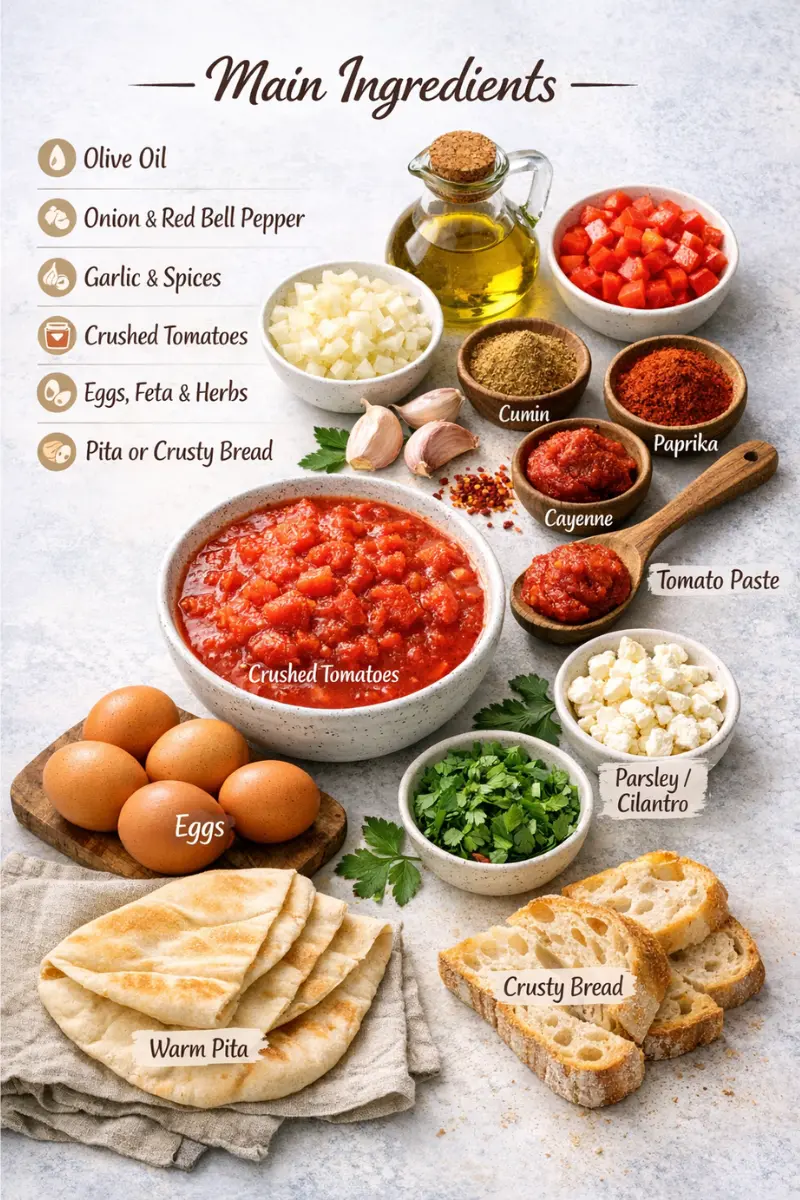
The ingredients for shakshuka are simple, but each one matters. This dish depends on everyday items working together in the right way. Onion and pepper build sweetness. Garlic and spices add warmth. Tomatoes create the body of the sauce. Eggs finish the pan and turn it into a complete meal. Many trusted shakshuka recipes follow this same core structure, with olive oil, onion, bell pepper, garlic, tomatoes, cumin, paprika, and eggs as the heart of the dish.
Main Ingredients
- 2 tablespoons olive oil
- 1 small onion, finely diced
- 1 red bell pepper, diced
- 3 garlic cloves, minced
- 1 teaspoon ground cumin
- 1 teaspoon paprika
- 1/4 teaspoon cayenne pepper or red chili flakes, optional
- 1 tablespoon tomato paste
- 1 can (28 ounces) crushed tomatoes
- 1/2 teaspoon salt, or to taste
- 1/4 teaspoon black pepper, or to taste
- 6 large eggs
- 2 tablespoons chopped fresh parsley or cilantro
- 1/4 cup crumbled feta, optional
- Warm pita or crusty bread, for serving
Ingredient Notes
The olive oil should be good quality because it is the first flavor that goes into the pan. The onion should be small enough to soften quickly. The bell pepper adds sweetness and body, so do not skip it. Garlic should be fresh for the best flavor.
Cumin gives shakshuka its earthy, warm taste. Paprika adds color and a gentle sweetness. A little cayenne or chili flake is enough if you want heat, but it is not required. Tomato paste is a small addition that helps deepen the sauce and gives it a fuller taste.
Crushed tomatoes work very well here because they give you a sauce that becomes thick and spoonable. Eggs should be large and fresh. Fresh parsley or cilantro adds brightness at the end. Feta is optional, but it adds a creamy, salty finish that works beautifully with the tomato base.
Step by Step Recipe Method
This is the core of the recipe, and it is where the final result is decided. Shakshuka is not difficult, but it does reward good timing. The vegetables need enough time to soften. The tomato mixture needs enough time to simmer and reduce. The eggs need gentle heat so they cook without turning tough. Good shakshuka recipes consistently stress the same method: soften the vegetables first, simmer the tomato sauce until it thickens, then add the eggs and cook them gently until the whites are set.
Step 1: Heat the Pan and Start the Base
Place a large skillet or frying pan over medium heat. Add the olive oil and let it warm for a few seconds. Once the oil looks slightly loose and glossy, add the diced onion and red bell pepper.
Stir them well so they are coated in the oil. Let them cook for about 6 to 8 minutes, stirring now and then. Do not rush this part. You want the onion to turn soft and slightly sweet, and the pepper to lose its raw bite. If the heat is too high, the vegetables may brown too fast on the outside and stay firm inside. Medium heat is best because it gives them time to soften properly.
This early stage matters more than many people think. When onion and pepper are cooked well, they make the whole sauce taste rounder and richer. If they stay undercooked, the final shakshuka can taste sharp and unfinished.
Step 2: Add the Garlic and Spices
Once the onion and pepper are soft, add the minced garlic, cumin, paprika, and cayenne or chili flakes if using. Stir for about 30 seconds to 1 minute.
This is a short step, but it makes a big difference. The warm oil wakes up the spices and helps them release more aroma and flavor into the dish. Keep stirring and do not leave the pan unattended here, because garlic can burn quickly. Burnt garlic will make the sauce taste bitter.
The smell at this point should be warm, savory, and inviting. That is a sign you are building a strong base for the tomatoes.
Step 3: Add the Tomato Paste
Add the tomato paste and stir it into the vegetables and spices for about 1 minute.
This step gives the sauce extra depth. Tomato paste tastes better when it cooks a little in the pan instead of going straight into liquid. It becomes slightly darker and richer, and that makes the final shakshuka taste more developed.
Make sure the tomato paste is spread evenly through the mixture before moving to the next step.
Step 4: Pour in the Tomatoes and Season the Sauce
Add the crushed tomatoes, salt, and black pepper. Stir everything together until fully mixed.
At first, the sauce will look loose. That is normal. Lower the heat slightly so the sauce cooks at a gentle simmer, not a hard boil. Let it simmer uncovered for 12 to 15 minutes, stirring from time to time.
This is the step that turns simple ingredients into shakshuka. As the sauce cooks, the extra liquid reduces, the flavors settle, and the mixture becomes thicker. You are looking for a sauce that holds its shape when you drag a spoon through it. It should not be dry, but it should not be watery either. If it looks too thin, give it a few more minutes.
Taste the sauce before adding the eggs. This is your best chance to adjust the seasoning. If it tastes flat, add a pinch more salt. If you want more warmth, add a little more paprika or cumin. If the tomatoes taste too sharp, let the sauce simmer a little longer.
Step 5: Make Spaces for the Eggs
Once the sauce has thickened, use the back of a spoon to make 6 small wells in the sauce. These are the spaces where the eggs will sit.
Crack one egg into each well. Try to keep the yolks whole and place the eggs with a little space between them. This helps them cook more evenly and makes the pan look neater when served.
If one egg spreads a little, do not worry. Home cooking does not need to look perfect. The most important thing is that the eggs settle gently into the sauce.
Step 6: Cover and Cook the Eggs Gently
Reduce the heat to low and cover the pan with a lid. Let the eggs cook for about 5 to 8 minutes.
The exact time depends on how you like your eggs. For runnier yolks, check earlier. For firmer yolks, cook a bit longer. The whites should be set and no longer look raw or clear. The yolks can still have a soft center if that is how you enjoy them.
Cooking the eggs gently is very important. High heat can make the bottoms overcook before the tops are ready. Covering the pan traps heat and steam, which helps the whites cook through without making the eggs rubbery. This is one of the key best practices in shakshuka because the eggs are not fried. They are gently cooked in the sauce.
Step 7: Finish with Fresh Herbs and Feta
Once the eggs are cooked the way you like, turn off the heat. Sprinkle the chopped parsley or cilantro over the top. Add the crumbled feta if using.
The fresh herbs brighten the whole pan and make the tomato sauce taste fresher. The feta adds a creamy, salty touch that pairs very well with the eggs and tomatoes. This step is simple, but it lifts the dish and makes it feel complete.
Step 8: Serve Right Away
Serve shakshuka hot, straight from the pan. Add warm pita or crusty bread on the side.
The bread is not just an extra. It is part of the experience. A good piece of bread lets you scoop up the rich sauce, the soft egg, and the herbs in one bite. That is what makes shakshuka feel so satisfying and comforting.
Variations in the Recipe
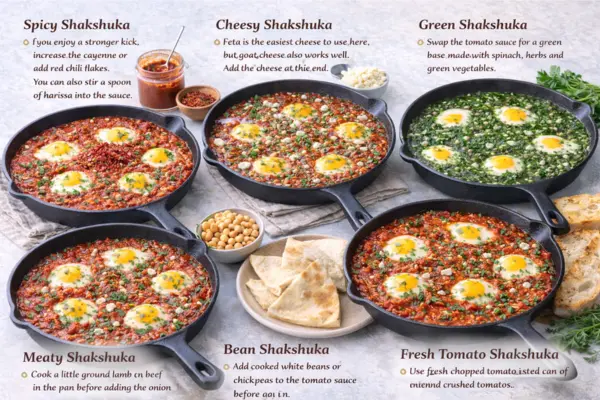
One of the best things about shakshuka is how easy it is to adjust. The classic version is hard to beat, but once you understand the base method, you can change the flavor in simple ways without losing what makes the dish special. Many popular shakshuka versions stay close to the same cooking method while changing the heat level, the toppings, or the main sauce ingredients.
Spicy Shakshuka
If you enjoy a stronger kick, increase the cayenne or add red chili flakes. You can also stir a spoon of harissa into the sauce. Harissa is a chili paste that adds heat along with deeper flavor. Start with a small amount so it does not take over the dish.
Cheesy Shakshuka
Feta is the easiest cheese to use here, but goat cheese also works well. Add the cheese at the end so it softens slightly without fully melting into the sauce. This variation gives the dish a creamy, salty finish.
Green Shakshuka
For a different take, swap the tomato sauce for a green base made with spinach, herbs, and green vegetables. The cooking method stays similar, but the flavor becomes fresher and lighter. This is a nice option when you want something different from the red sauce version.
Meaty Shakshuka
If you want a heartier dish, cook a little ground lamb or beef in the pan before adding the onion and pepper. Remove excess fat if needed, then continue with the recipe. This makes the dish richer and more filling.
Bean Shakshuka
Add cooked white beans or chickpeas to the tomato sauce before the eggs go in. This gives the shakshuka more body and makes it even more satisfying, especially if you are serving it for lunch or dinner.
Fresh Tomato Shakshuka
When tomatoes are ripe and full of flavor, you can use fresh chopped tomatoes instead of canned crushed tomatoes. Fresh tomatoes may need a bit more cooking time because they often release more liquid. Keep simmering until the sauce thickens well.
Mistakes to Avoid
Shakshuka is a simple dish, but a few common mistakes can change the result quickly. Most problems come down to texture, timing, or seasoning. If you avoid these small issues, your shakshuka will be much better from the very first try.
Not Cooking the Onion and Pepper Long Enough
If the vegetables are rushed, the sauce will taste raw and rough. The onion should become soft and slightly sweet. The pepper should lose its firmness. This step builds the flavor of the whole pan.
Adding the Eggs Too Early
The sauce must thicken before the eggs go in. If it is still watery, the eggs will spread too much and the whole dish will feel loose. A thick sauce supports the eggs and gives the dish its proper texture.
Using Heat That Is Too High
High heat can burn the garlic, reduce the sauce too harshly, or overcook the eggs. Shakshuka needs steady, controlled heat. Medium for the vegetables and low for the eggs works best.
Underseasoning the Sauce
Tomatoes need enough salt and spice to taste lively. If the sauce tastes dull before the eggs are added, it will still taste dull after they cook. Always taste and adjust before moving on.
Overcooking the Eggs
This is one of the most common problems. The whites should be set, but the yolks do not need to be hard unless that is your preference. Check the pan early and often near the end of cooking. Once eggs overcook, they lose the soft texture that makes shakshuka so enjoyable.
Forgetting to Serve It with Bread
Shakshuka is best with something to scoop up the sauce. Warm pita or crusty bread turns it into a complete and very satisfying meal.
Conclusion
Shakshuka is a beautiful example of how simple ingredients can create something deeply comforting and full of flavor. With one pan, a handful of everyday ingredients, and a little care, you can make a meal that feels special any time of day. The keys are easy to remember: soften the vegetables well, build a rich tomato sauce, let it thicken properly, and cook the eggs gently.
Once you make the classic version a few times, the recipe starts to feel natural. After that, you can adjust the heat, add cheese, include beans, or try another version with confidence. This is the kind of dish that rewards practice and quickly becomes a favorite at home.
If you enjoyed this recipe, check the homepage for more food recipes that are just as flavorful, practical, and easy to make in your own kitchen.
FAQs Section
This section answers the questions home cooks often ask before making shakshuka for the first time. These small details can make the recipe easier and help you get a better result.
What is shakshuka?
Shakshuka is a dish made by gently cooking eggs in a spiced tomato and pepper sauce. It is strongly associated with North Africa and is also widely enjoyed across the Middle East.
Is shakshuka spicy?
It can be mild or spicy depending on how you season it. The base recipe is warmly spiced, not necessarily hot. If you like more heat, add cayenne, chili flakes, or harissa.
Can I make shakshuka without feta?
Yes. Feta is optional. The dish still tastes excellent without it. Feta simply adds a salty, creamy finish.
Can I use fresh tomatoes instead of canned tomatoes?
Yes, you can. Fresh tomatoes work best when they are ripe and flavorful. They may need a little more simmering time because they usually release more liquid.
How do I know when the eggs are done?
The whites should look set and no longer raw. The yolks can stay soft if you like them runny, or you can cook them longer for a firmer finish. Start checking after about 5 minutes.
Can I make the sauce ahead of time?
Yes. You can prepare the tomato sauce in advance, cool it, and keep it in the fridge. When ready to serve, reheat the sauce gently, make the wells, add the eggs, and finish the dish fresh.
What should I serve with shakshuka?
Warm pita, flatbread, or crusty bread are the best choices. They help you scoop up the sauce and eggs easily, and they make the meal feel complete.
Is shakshuka only for breakfast?
Not at all. It is popular for breakfast, but it also works very well for brunch, lunch, or a simple dinner. That is one reason it has become such a loved home recipe.




- Be Respectful
- Stay Relevant
- Stay Positive
- True Feedback
- Encourage Discussion
- Avoid Spamming
- No Fake News
- Don't Copy-Paste
- No Personal Attacks
- Be Respectful
- Stay Relevant
- Stay Positive
- True Feedback
- Encourage Discussion
- Avoid Spamming
- No Fake News
- Don't Copy-Paste
- No Personal Attacks
