Chocolate Mitted Ragdoll – The Sweetest of All Ragdoll Colors!
Published: 8 Nov 2025
We adore Ragdolls and the chocolate mitted variety always steals our hearts. They look like someone dipped a fluffy marshmallow into warm cocoa and gave it tiny white socks — how purr-fect is that? In this post we’ll dive into everything we know about the chocolate mitted Ragdoll: what the pattern is, how the color develops from newborn to adult, which parents can produce chocolate mitted kittens, how rare and unique they are, how chocolate mitteds compare to other colors, fun facts and common myths, plus grooming and care tips to keep their coat glossy and their hearts happy.
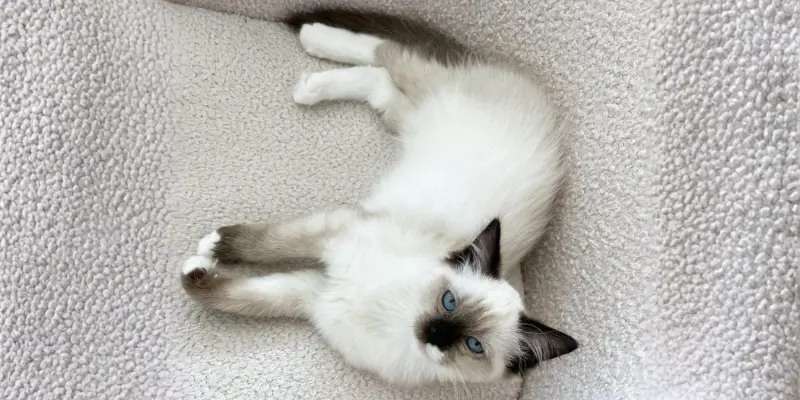
We’ll keep things simple, warm, and practical — just like chatting with another Ragdoll parent over a cup of tea (and a lap full of purring fluff). Shall we begin?
What is a Chocolate Mitted Ragdoll?
A chocolate mitted Ragdoll is a Ragdoll cat that combines two things: the warm brown chocolate point color and the mitted white-glove pattern.
- Chocolate refers to the shade of the points — the ears, face mask, tail, and legs. It’s a warm, milky-brown tone rather than the deep, almost-black brown of seal.
- Mitted means the cat has white paws (like little mittens) and often a white chin, throat, and belly stripe. The mitts are usually clean and symmetrical, giving that adorable “wearing socks” look.
Put together, the chocolate points against a creamy or ivory body and white mitts create a soft, cozy contrast that feels gentle and luxurious. Most chocolate mitted Ragdolls also have bright blue eyes that pop against the warm shades — a real heart-melter.
Appearance of Chocolate Mitted Ragdoll
We love talking about looks — after all, their appearance is part of the magic. Here’s what to expect when you meet a chocolate mitted Ragdoll.
Coat and color details
- Body: Usually creamy, ivory, or pale beige. The body color stays lighter than the points.
- Points (ears, face, tail, legs): Warm chocolate brown. Think milk chocolate rather than dark espresso.
- Mitted markings: White paws (often with a clear mitt on the front feet), white chin, and sometimes a white stripe along the belly. The mitts can be short or extend slightly up the legs, depending on the cat.
- Eyes: Bright, vivid blue — a classic Ragdoll trait that contrasts beautifully with chocolate tones.
Size and build
- Ragdolls are a large and sturdy breed with a muscular body, broad chest, and a long, bushy tail.
- Their fur is semi-long and silky. It feels soft and plush when we stroke it.
- Their face has that gentle, open expression that makes them look like teddy bears — and chocolate coloring often enhances that warm, hugging look.
Kitten vs adult appearance
- Kittens are born pale — often almost white — and the chocolate points show up gradually.
- Over the first months and years, the chocolate deepens and the white mitts become more defined.
- By adulthood (usually around 2–3 years) the full color and pattern are established.
How the color changes from day 1 to adult
Watching a chocolate mitted Ragdoll grow is one of our favorite slow-reveal moments. Their color journey is gentle, and every stage is adorable.
Newborns: tiny snowballs
All Ragdoll kittens, including chocolate mitteds, are born very light — almost white. Their points are just faint shadows at first, so they look like little snowballs.
First weeks: faint hints of color
Around 4–8 weeks the first hints of color begin to appear on the ears and tail. The chocolate tone starts as a soft tan or beige and slowly warms up.
2–6 months: color develops noticeably
Between two and six months the chocolate deepens and spreads. The face mask becomes clearer and the mitts and chin whitenings become more obvious. This is a fun stage because each kitten changes slightly differently — we love tracking their progress.
1–3 years: the final bloom
Ragdolls are slow color-developers. Many don’t reach their full adult coloring until 2–3 years old. The chocolate points continue to deepen, but they stay warmer and milkier than the darker seal tones. The mitts usually stay bright white, creating a lovely contrast.
What affects the color?
- Genetics are the main driver. If both parents carry the chocolate genes, kittens are more likely to show chocolate points.
- Temperature can affect shading: cooler areas of a kitten’s body may darken more quickly (this is true for many breeds with point coloration).
- Age is the big factor — patience pays off. Watching the gradual change is part of the joy.
Which parents can make a Chocolate Mitted Ragdoll?
Genetics can sound complicated but we’ll keep it simple and friendly.
Basic idea
- The chocolate color is typically produced by recessive genes. That means both parents need to carry the chocolate gene for a chocolate kitten to be possible.
- The mitted pattern is another trait that can be passed down. If one or both parents carry the mitted gene, they can produce mitted kittens.
Practical combinations
- If both parents are chocolate carriers (whether they show chocolate or not), there’s a chance of chocolate kittens.
- If both parents carry the mitted gene, mitted kittens are likely.
- To get a chocolate mitted kitten, the parents need to provide the chocolate gene and the mitted gene in the right combination.
Why it’s not guaranteed
Even when both parents carry the genes, genetics works like a lottery. Some litters may have chocolate mitted kittens, others may not. That uncertainty is part of breeding and part of the charm — every kitten is a unique surprise.
Rarity & uniqueness of Chocolate Mitted Ragdolls
Chocolate mitted Ragdolls are not the most common color pattern. Why? Because they require a fairly specific genetic pairing: chocolate coloration plus mitted markings. That combination doesn’t show up as often as seal or blue varieties.
What makes them special
- The warm, milky-brown points give a cozy, unique look that stands out.
- The bright white mitts add a playful, almost storybook charm.
- Many Ragdoll lovers feel chocolate mitteds have a distinctly “soft” aesthetic compared to darker colors.
Popularity and demand
They’re becoming more popular as people discover the gentle warmth of their color. Breeders who specialize in chocolate tones often see high interest from families looking for that unique, cuddly look.
Colour comparisons: Chocolate Mitted vs other Ragdoll shades
When we compare chocolate mitteds to other shades, the differences are subtle but meaningful. Here’s a friendly guide to help identify and appreciate the differences.
Chocolate vs Seal
- Chocolate: warm, milk-chocolate brown. Softer and lighter.
- Seal: much darker, closer to very dark brown or near-black. Stronger contrast with the body color.
- Think: seal is espresso; chocolate is hot cocoa with milk.
Chocolate vs Blue
- Blue point: has grayish, slate tones (a cool color).
- Chocolate: warm brown (a cozy color).
- Both are lovely, but blue feels cooler and more silvery, while chocolate feels warm and cuddly.
Chocolate vs Lilac (also called lavender)
- Lilac: very pale, almost pinkish-gray tone — very cool and delicate.
- Chocolate: warm and brown — very cozy and rich.
- Lilac is a rarer, delicate color; chocolate is richer and earthier.
Chocolate mitted vs Chocolate bicolor
- Mitted: white mitts and chin, with a mostly colored face mask.
- Bicolor: more extensive white markings (often an inverted V on the face and more white on the body).
- Mitteds wear their white like socks; bicolors wear a white bib and facial blaze.
Fun facts & myths about Chocolate Mitted Ragdolls
We love sharing little surprises and setting myths straight — here are a few fun facts and common misconceptions.
Fun facts
- Some chocolate-toned cats can look slightly lighter in bright summer months. Their fur reflects the light differently, especially on the body.
- Chocolate mitteds often feel extra silky because lighter pigments can create a softer-looking coat.
- Their blue eyes can look especially vivid against warmer brown points — like tiny sapphires in a chocolate frame!
Myths we clear up
- Myth: Chocolate Ragdolls are a separate breed.
Truth: They are the same Ragdoll breed — just a color/pattern variation. - Myth: Chocolate cats are friendlier.
Truth: Personality depends on the individual and upbringing; color doesn’t determine love levels (though we do think ours are wonderfully snuggly!). - Myth: Chocolate will fade completely with age.
Truth: Colors may shift slightly as the cat matures but they don’t vanish — chocolate typically deepens with age rather than fades away.
Personality & temperament of Chocolate Mitted Ragdolls
Good news: their coat color doesn’t change their hearts. Chocolate mitted Ragdolls share the classic Ragdoll temperament we adore.
Typical traits
- Gentle and calm: Ragdolls are famously laid-back and easygoing.
- Affectionate: They love to be with us — often following us around or curling in our laps.
- “Floppy” nature: Many Ragdolls relax their bodies when picked up — that floppy, trusting feel is part of their charm.
- Sociable: They usually get along well with other pets and children when introduced kindly.
We like to say the chocolate just dresses the same loving heart in a cozy brown coat. Whether our Ragdoll wears mitts, a bib or a full mask, they want belly rubs and bedtime cuddles just the same.
Grooming & care tips for Chocolate Mitted Ragdolls
Keeping their coat healthy and their personality bright is easy with a little routine.
Coat care
- Brush regularly: Aim for 2–3 times a week to keep the semi-long fur silky and to prevent tangles.
- Use a soft brush: A soft-bristle brush or a wide-tooth comb feels gentle and effective. Make grooming cuddle time, not chore time.
- Baths rarely needed: Ragdolls usually keep themselves tidy, but a bath every few months (or when needed) with a gentle, cat-safe shampoo is fine.
Nutrition & skin health
- High-quality diet: Good nutrition supports shiny fur. We feed diets with balanced protein, essential fatty acids, and hydration.
- Hydration: Fresh water daily helps skin and coat health — consider a cat fountain if they love running water.
Sun and color
- Avoid long, direct sun exposure: Prolonged sun can alter pigmentation and dry skin. A sunny nap is fine, but watch for long, intense exposure.
Emotional care
- Daily attention: Ragdolls thrive on interaction. Spend time playing, cuddling, or simply being nearby.
- Gentle handling: They respond well to calm voices and soft touches. It builds trust and strengthens your bond.
Conclusion
We are completely charmed by chocolate mitted Ragdolls. Their warm, milk-chocolate points, snowy white mitts and bright blue eyes make them look like little clouds of cocoa with socks — and their gentle, loving nature makes them perfect family companions.
If you are thinking of welcoming a chocolate mitted into your home, remember: genetics and patience both play a part but love and care are what make any Ragdoll truly shine. Share a photo or story of your chocolate cuddle buddy with us — we’d love to see those mitts and hear about purr-filled moments!
Want us to help write a photo caption, adoption listing or a short bio for a chocolate mitted kitten? We’re all ears (and whiskers).
FAQs About quick answers for curious cat parents
Here is the list of FAQs:
It’s a Ragdoll with warm chocolate-brown points plus white mitts (paws) and often a white chin or belly stripe. The body stays creamy or ivory, and the eyes are usually bright blue.
They’re less common than seal or blue, because chocolate plus mitted requires specific genetics. That makes them a bit special.
Chocolate is warmer and lighter — think milk chocolate. The seal is much darker, almost espresso-like. Look for a warm, softer brown for chocolate.
Yes. Kittens are born pale and develop points over months. Full adult color may take up to 2–3 years to appear.
Both parents need to carry the chocolate gene and the mitted pattern gene. Even then, it’s a genetic roll of the dice.
Color doesn’t determine personality. Ragdolls overall are affectionate, and many owners of chocolate mitteds report wonderfully sweet temperaments.
Brush 2–3 times weekly with a soft brush, feed a quality diet, keep them hydrated and make grooming into gentle bonding time.



- Be Respectful
- Stay Relevant
- Stay Positive
- True Feedback
- Encourage Discussion
- Avoid Spamming
- No Fake News
- Don't Copy-Paste
- No Personal Attacks
- Be Respectful
- Stay Relevant
- Stay Positive
- True Feedback
- Encourage Discussion
- Avoid Spamming
- No Fake News
- Don't Copy-Paste
- No Personal Attacks
